



• What's the Biggest Vulnerability in YOUR Business?


    Every business has its strengths and weaknesses, but what's the one thing that could bring it all crashing down?

    l have been asking business leaders this question, today I want to ask you too.

    What's the biggest vulnerability in your business?

    Here are a few possibilities, I want you to make a list of your own.

    1. **Lack of Adaptability**: The inability to pivot when circumstances change can be devastating. Is your business flexible enough to adapt to new market trends, technologies, and consumer behaviors?

    2. **Poor Leadership**: Weak leadership can lead to poor decision-making, low employee morale, and a lack of direction. Is your leadership team strong and effective?

    3. **Insufficient Cash Flow**: Running out of money can be a death sentence for any business. Do you have a solid financial plan in place, including a cash reserve and a plan for managing debt?

    4. **Cybersecurity Threats**: In today's digital age, cybersecurity threats are a major concern. Is your business protected against hackers, malware, and other online threats?

    5. **Over-Reliance on a Single Customer or Supplier**: Putting all your eggs in one basket can be a recipe for disaster. Do you have a diversified customer base and a reliable supply chain?

    6. **Efficiency vs. Resiliency**: The pursuit of efficiency can sometimes come at the expense of resiliency. Is your business optimized for efficiency, but vulnerable to disruptions? Or can you bounce back quickly from unexpected setbacks?

    It time to take action , join our masterclass .

    MARBLE LEADERS TEAM

    What's the Biggest Vulnerability in YOUR Business? Every business has its strengths and weaknesses, but what's the one thing that could bring it all crashing down? l have been asking business leaders this question, today I want to ask you too. What's the biggest vulnerability in your business? Here are a few possibilities, I want you to make a list of your own. 1. **Lack of Adaptability**: The inability to pivot when circumstances change can be devastating. Is your business flexible enough to adapt to new market trends, technologies, and consumer behaviors? 2. **Poor Leadership**: Weak leadership can lead to poor decision-making, low employee morale, and a lack of direction. Is your leadership team strong and effective? 3. **Insufficient Cash Flow**: Running out of money can be a death sentence for any business. Do you have a solid financial plan in place, including a cash reserve and a plan for managing debt? 4. **Cybersecurity Threats**: In today's digital age, cybersecurity threats are a major concern. Is your business protected against hackers, malware, and other online threats? 5. **Over-Reliance on a Single Customer or Supplier**: Putting all your eggs in one basket can be a recipe for disaster. Do you have a diversified customer base and a reliable supply chain? 6. **Efficiency vs. Resiliency**: The pursuit of efficiency can sometimes come at the expense of resiliency. Is your business optimized for efficiency, but vulnerable to disruptions? Or can you bounce back quickly from unexpected setbacks? It time to take action , join our masterclass . MARBLE LEADERS TEAM
    0 Σχόλια 0 Μοιράστηκε 2χλμ. Views 0 Προεπισκόπηση

  • Listen up, Men! The Rich Are Hiding Secrets—But I’m About to Expose Them

    The rich aren’t rich by luck. They didn’t stumble into wealth. They played a game you were never taught. And they’re not about to teach you either—because if you learn the rules, you become a threat.

    But you see this page? I didn’t build it for simps. I built it for men ready to break free. So listen, not just for yourself, but for every hommie you roll with. These 7 secrets will make you a millionaire in under 12 months if you apply them like your life depends on it—because it does.

    1. The Rich Never Trade Time for Money—They Trade Value for Wealth
    While you clock in and out like a robot, they build systems that work for them 24/7—investments, digital assets, businesses. Time is limited. Systems are scalable. Learn the damn difference.

    2. Debt Is Not Evil—Stupidity Is
    The rich use good debt to grow empires: property, equipment, business capital. You use bad debt to show off—iPhones, clubs, cars. Learn to leverage debt. If debt doesn’t make you money, it’s slavery.

    3. 9–5 Will Feed You—But Ownership Will Free You
    They use salaries as startup capital. You use salaries as status. One builds empires, the other buys liabilities. Own something. Even if it’s a small hustle, grow it.

    4. Your Network Is Your Net Worth
    They don’t hang with broke-minded complainers. Every friend adds value, insights, connections, or capital. If your circle isn’t building, they’re bleeding you. Cut them.

    5. Silence Is a Wealth Strategy
    The rich don’t announce. They move in stealth. While you're posting fake life on social media, they're acquiring land, shares, and equity. Move like a shadow, strike like thunder.

    6. The Rich Invest in Financial Education—Daily
    They read books, attend masterminds, buy courses. You watch skits, football, and porn. Knowledge is the new currency. Learn or stay broke.

    7. They Sell. Period.
    Every millionaire is a salesman. They sell a product, a brand, a service, or a skill. If you can’
    Listen up, Men! The Rich Are Hiding Secrets—But I’m About to Expose Them The rich aren’t rich by luck. They didn’t stumble into wealth. They played a game you were never taught. And they’re not about to teach you either—because if you learn the rules, you become a threat. But you see this page? I didn’t build it for simps. I built it for men ready to break free. So listen, not just for yourself, but for every hommie you roll with. These 7 secrets will make you a millionaire in under 12 months if you apply them like your life depends on it—because it does. 1. The Rich Never Trade Time for Money—They Trade Value for Wealth While you clock in and out like a robot, they build systems that work for them 24/7—investments, digital assets, businesses. Time is limited. Systems are scalable. Learn the damn difference. 2. Debt Is Not Evil—Stupidity Is The rich use good debt to grow empires: property, equipment, business capital. You use bad debt to show off—iPhones, clubs, cars. Learn to leverage debt. If debt doesn’t make you money, it’s slavery. 3. 9–5 Will Feed You—But Ownership Will Free You They use salaries as startup capital. You use salaries as status. One builds empires, the other buys liabilities. Own something. Even if it’s a small hustle, grow it. 4. Your Network Is Your Net Worth They don’t hang with broke-minded complainers. Every friend adds value, insights, connections, or capital. If your circle isn’t building, they’re bleeding you. Cut them. 5. Silence Is a Wealth Strategy The rich don’t announce. They move in stealth. While you're posting fake life on social media, they're acquiring land, shares, and equity. Move like a shadow, strike like thunder. 6. The Rich Invest in Financial Education—Daily They read books, attend masterminds, buy courses. You watch skits, football, and porn. Knowledge is the new currency. Learn or stay broke. 7. They Sell. Period. Every millionaire is a salesman. They sell a product, a brand, a service, or a skill. If you can’
    0 Σχόλια 0 Μοιράστηκε 3χλμ. Views 0 Προεπισκόπηση
  • Liabilities:

    Liabilities refer to the debts or financial obligations of the business owed to others. Some examples of liabilities include, salaries owed to employees, products owed to customers, and payments owed to vendors, as well as notes payable, accounts payable, and sales taxes.
    Liabilities: Liabilities refer to the debts or financial obligations of the business owed to others. Some examples of liabilities include, salaries owed to employees, products owed to customers, and payments owed to vendors, as well as notes payable, accounts payable, and sales taxes.
    Love
    1
    0 Σχόλια 0 Μοιράστηκε 750 Views 0 Προεπισκόπηση
  • WHAT IS FINANCIAL LITERACY?
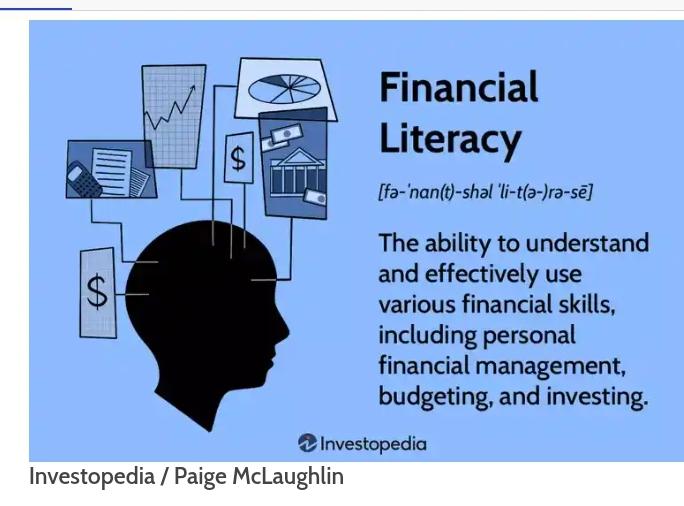
    Financial literacy is the ability to understand and effectively use various financial skills, including personal financial management, budgeting, and investing.


    When you are financially literate, you have the essential foundation for a smart relationship with money. This can help start a lifelong journey of learning about the financial aspects of your life. The earlier you start to become financially literate, the better off you'll be because education is the key to a successful financial future.

    Key Takeaways
    The term “financial literacy” refers to understanding a variety of important financial skills and concepts.
    Financially literate people are generally less vulnerable to financial fraud.
    A strong foundation of financial literacy can help support various life goals, such as saving for education or retirement, using debt responsibly, and running a business.
    Key aspects of financial literacy include knowing how to create a budget, plan for retirement, manage debt, and track personal spending.
    Financial literacy can be obtained through reading books, listening to podcasts, subscribing to financial content, or talking to a financial professional.
    Financial Literacy
    Investopedia / Paige McLaughlin

    Understanding Financial Literacy
    Since about 2000, financial products and services have become increasingly widespread throughout society. Whereas earlier generations of U.S. residents may have purchased goods primarily in cash, various credit products are popular today, such as credit and debit cards and electronic transfers. A 2021 survey by the Federal Reserve Bank of San Francisco revealed that 28% of all payments were made via credit card, with only 20% being made in cash.


    WHAT IS FINANCIAL LITERACY? Financial literacy is the ability to understand and effectively use various financial skills, including personal financial management, budgeting, and investing. When you are financially literate, you have the essential foundation for a smart relationship with money. This can help start a lifelong journey of learning about the financial aspects of your life. The earlier you start to become financially literate, the better off you'll be because education is the key to a successful financial future. Key Takeaways The term “financial literacy” refers to understanding a variety of important financial skills and concepts. Financially literate people are generally less vulnerable to financial fraud. A strong foundation of financial literacy can help support various life goals, such as saving for education or retirement, using debt responsibly, and running a business. Key aspects of financial literacy include knowing how to create a budget, plan for retirement, manage debt, and track personal spending. Financial literacy can be obtained through reading books, listening to podcasts, subscribing to financial content, or talking to a financial professional. Financial Literacy Investopedia / Paige McLaughlin Understanding Financial Literacy Since about 2000, financial products and services have become increasingly widespread throughout society. Whereas earlier generations of U.S. residents may have purchased goods primarily in cash, various credit products are popular today, such as credit and debit cards and electronic transfers. A 2021 survey by the Federal Reserve Bank of San Francisco revealed that 28% of all payments were made via credit card, with only 20% being made in cash.
    0 Σχόλια 0 Μοιράστηκε 2χλμ. Views 0 Προεπισκόπηση
Προωθημένο

Make Money Faster Online: Sell Anything on AmarsCity Marketplace & Earn AmarsCoin (AMSC) Daily

What if there was a platform where you don’t just sell—but also get rewarded for simply showing up, posting, and engaging? Welcome to the AmarsCity Marketplace — a powerful...