


Trends Shaping the Future of Real Estate App Development
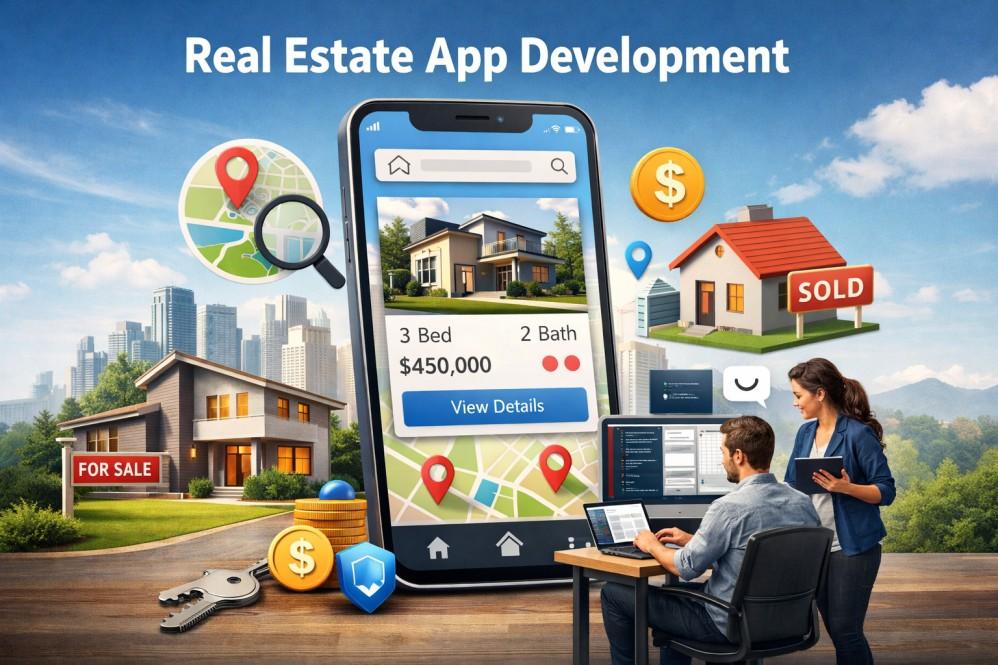
The real estate industry has undergone a major digital transformation in recent years. With the rise of smartphones and mobile technology, property buyers, sellers, and agents are increasingly relying on mobile apps to streamline the property search and transaction process. Real estate apps allow users to explore property listings, schedule visits, compare prices, and even complete transactions online. As technology continues to evolve, new trends are shaping the future of real estate app development and transforming how the industry operates.
In this article, we explore the most important trends that are influencing the future of real estate app development and why businesses must adapt to stay competitive in the digital property market.
Artificial Intelligence and Smart Property Recommendations
Artificial Intelligence (AI) is becoming a powerful tool in real estate applications. AI-driven algorithms can analyze user behavior, search patterns, and preferences to provide personalized property recommendations. Instead of manually browsing hundreds of listings, users can receive tailored suggestions that match their budget, location, and lifestyle needs.
AI also helps improve the efficiency of real estate platforms by automating tasks such as customer support, data analysis, and lead management. Chatbots powered by AI can instantly answer user queries, schedule property visits, and guide potential buyers through the decision-making process. This improves user experience while helping real estate businesses manage customer interactions more effectively.
Virtual Reality and Augmented Reality Property Tours
One of the most exciting trends in real estate app development is the integration of Virtual Reality (VR) and Augmented Reality (AR). These technologies allow users to explore properties remotely through immersive virtual tours.
With VR, potential buyers can walk through a property virtually without physically visiting the location. This feature is especially helpful for international buyers or people relocating to another city. AR, on the other hand, allows users to visualize furniture placement, interior designs, and renovations within a property using their smartphone cameras.
These immersive experiences make property exploration more engaging and convenient, reducing the need for multiple in-person visits.
Advanced Property Search and Map Integration
Modern real estate apps are now offering smarter search features with advanced filters and map-based property exploration. Users can search properties based on price range, property type, amenities, neighborhood ratings, and more.
Map integration is another key trend that enhances user experience. By using interactive maps, users can easily view property locations, nearby schools, hospitals, shopping centers, and transportation facilities. This helps buyers make informed decisions based on location and lifestyle factors.
As technology improves, future real estate apps will offer even more sophisticated search tools powered by location intelligence and predictive analytics.
Blockchain for Secure Real Estate Transactions
Blockchain technology is slowly making its way into the real estate industry. Real estate transactions typically involve multiple intermediaries, paperwork, and lengthy verification processes. Blockchain can simplify this by creating transparent and secure digital records of property ownership and transactions.
With blockchain-based systems, property deals can become faster, more secure, and less prone to fraud. Smart contracts can automate payment processes and ensure that agreements are executed only when all conditions are met.
While blockchain adoption in real estate is still developing, it has the potential to significantly improve transparency and trust within property transactions.
Integration of Big Data Analytics
Big data is playing a crucial role in shaping real estate app development. Real estate platforms collect large volumes of data related to property prices, buyer preferences, market trends, and neighborhood development.
By analyzing this data, real estate apps can provide valuable insights to both buyers and investors. For example, users can view property price trends, future investment potential, and demand forecasts for specific locations.
Real estate agents and developers can also use data analytics to identify profitable markets, understand customer needs, and develop targeted marketing strategies.
Smart Home Integration
The growth of smart home technology is also influencing the future of real estate applications. Many modern properties now include smart devices such as smart locks, lighting systems, security cameras, and energy management systems.
Real estate apps are beginning to integrate smart home features that allow homeowners to monitor and control these devices directly through their mobile applications. This integration enhances property value while offering convenience and improved security for homeowners.
As smart homes become more common, real estate apps will likely incorporate additional features for managing connected devices and monitoring property performance.
Mobile-First and User-Centric Design
Another important trend shaping real estate app development is the focus on mobile-first design. Most property searches today begin on smartphones, making it essential for real estate apps to offer smooth navigation, fast loading times, and intuitive user interfaces.
Developers are now prioritizing clean design layouts, simplified property search processes, and easy-to-use communication tools that allow buyers and agents to connect quickly. Features such as push notifications, saved searches, and instant chat support are becoming standard in modern real estate applications.
A user-centric design not only improves customer satisfaction but also increases user engagement and retention.
The Growing Importance of Real Estate Apps
The future of the real estate industry is closely tied to digital technology and mobile innovation. Real estate apps are no longer just a convenience; they have become an essential tool for property businesses to attract customers, streamline operations, and remain competitive in a rapidly evolving market.
Companies that invest in modern technologies such as AI, VR, blockchain, and data analytics will have a significant advantage in delivering better services and creating more efficient property platforms.
Businesses looking to build innovative property platforms should consider working with an experienced app development company bangalore that understands the latest technology trends and can deliver scalable, user-friendly real estate applications designed for the future.

 English
 Arabic
 French
 Spanish
 Portuguese
 Deutsch
 Turkish
 Dutch
Dutch
 Russian
 Romaian
 Portuguese (Brazil)
 Greek
Greek