A teak shower bench is naturally resistant to moisture, but constant exposure to water and humidity can still lead to mold and mildew if it is not properly maintained. While teak contains natural oils that help repel water, proper care ensures your teak shower bench stays clean, safe, and beautiful for years. Here’s how to effectively protect it from mold and mildew buildup.
Understand Why Mold Can Still Develop
Teak is highly water-resistant, but mold and mildew do not grow on the wood itself as much as they grow on surface dirt, soap residue, and moisture trapped in poorly ventilated spaces. In a humid shower environment, leftover soap and body oils create the perfect conditions for mildew to form. Keeping your teak shower bench clean and dry is the first line of defense.
Improve Bathroom Ventilation
Proper airflow significantly reduces moisture buildup. After each shower, leave the bathroom fan running for at least 15–20 minutes. If possible, open a window or keep the shower door slightly open to allow air circulation. Good ventilation helps your teak shower bench dry faster, limiting the damp conditions mold needs to grow.
Wipe Down After Each Use
A simple habit can make a big difference. Use a dry towel to wipe down your teak shower bench after showering. Removing excess water prevents pooling and reduces surface moisture. Pay extra attention to corners and joints where water may collect.
Clean Regularly with Mild Soap
Routine cleaning prevents soap scum and grime from accumulating. Once a week, gently scrub your teak shower bench with mild soap and warm water using a soft brush or cloth. Avoid harsh chemical cleaners or bleach, as they can strip the wood’s natural oils and weaken its protective qualities.
Use a Vinegar Solution for Early Mildew
If you notice small black or gray spots, mix equal parts white vinegar and water. Lightly scrub the affected area and rinse thoroughly. Vinegar helps kill mildew spores without damaging the wood. After cleaning, allow the teak shower bench to dry completely before using it again.
Ensure Proper Drainage
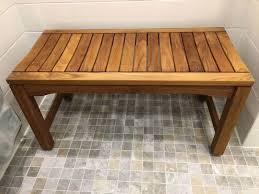
A slatted teak shower bench design allows water to drain easily. Make sure the bench is positioned so water does not pool underneath. Non-slip rubber feet can elevate the bench slightly, improving airflow and drainage beneath it.
Light Sanding for Stubborn Stains
For deeper mildew stains, light sanding with fine-grit sandpaper can refresh the surface. Always sand gently in the direction of the grain. This removes surface buildup and restores the smooth finish of your teak shower bench without compromising its strength.
Apply Teak Oil if Desired
Although not required for water resistance, applying teak oil can help maintain the rich golden color of the wood. If you choose to oil your teak shower bench, make sure it is completely dry before application. Keep in mind that oiling is mainly for appearance, not mold prevention.
Keep the Floor Clean
Mold can spread from shower floors to furniture. Regularly clean your shower tiles and grout to prevent spores from transferring to your teak shower bench. A clean shower environment supports long-term protection.
Conclusion
Protecting your teak shower bench from mold and mildew is simple with consistent care. Focus on proper ventilation, regular cleaning, quick drying, and good drainage to maintain its natural beauty and durability. With minimal maintenance, your teak shower bench will continue to perform exceptionally well in humid conditions, just like the best teak outdoor furniture designed to withstand moisture and changing environments.




 English
 Arabic
 French
 Portuguese
 Deutsch
 Turkish
 Dutch
Dutch
 Italiano
 Russian
 Romaian
 Portuguese (Brazil)
 Greek
Greek