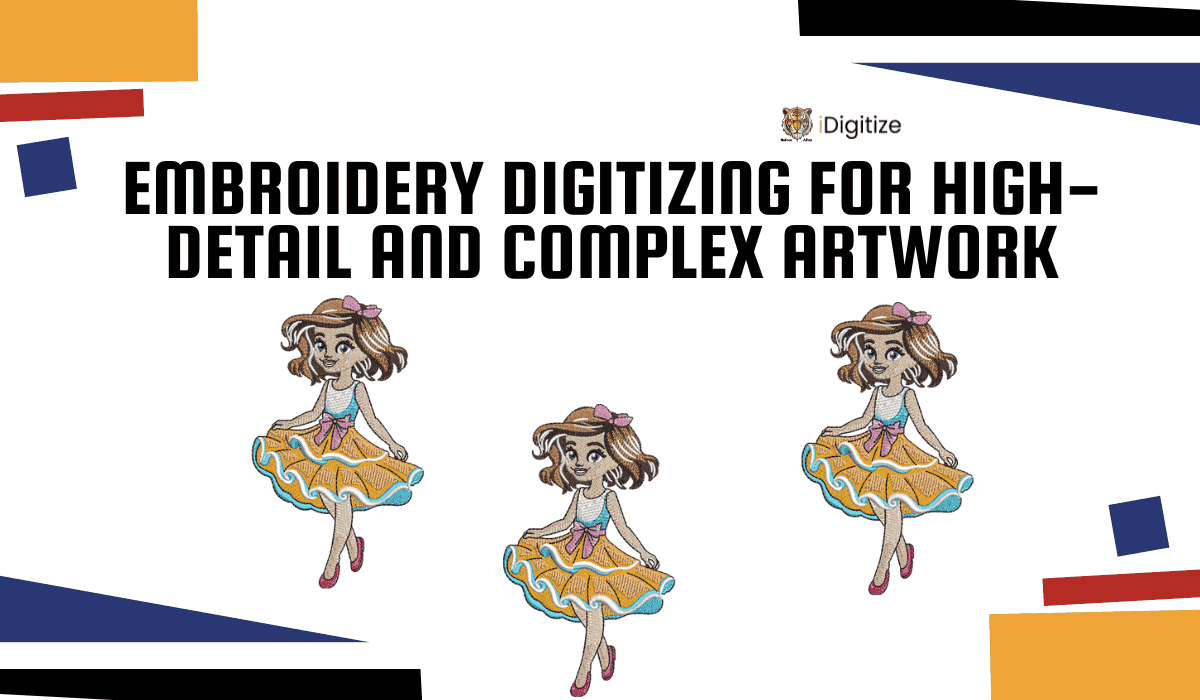
Detailed logos, intricate illustrations, and layered graphics require more than basic stitch conversion. When artwork includes small lettering, gradients, thin outlines, or overlapping elements, the digitizing process becomes highly technical. Embroidery Digitizing for complex designs demands careful planning to maintain clarity, prevent distortion, and ensure smooth machine operation. Without professional adjustments, high-detail artwork can lose definition or create production problems during stitching.
For embroidery businesses handling premium branding or artistic designs, advanced digitizing expertise is essential.
Why Complex Artwork Is Challenging in Embroidery
Unlike printing, embroidery uses thread, which has thickness and physical limitations. Fine details that look sharp on a digital screen may not translate directly onto fabric.
Common challenges include:
Professional embroidery digitizing addresses these challenges before production begins.
Simplifying Without Losing Identity
One of the most important steps in digitizing complex artwork is strategic simplification. This does not mean removing important design elements; instead, it involves adapting them for stitch clarity.
Digitizers may:
-
Slightly widen thin lines
-
Increase spacing between letters
-
Adjust small elements for visibility
-
Refine edges for smoother stitching
These subtle changes maintain design identity while improving stitch performance.
Stitch Type Selection for Detail Preservation
Different areas of a complex design require different stitch types.
-
Satin stitches work well for borders and text.
-
Fill stitches cover larger areas with controlled density.
-
Running stitches define fine outlines and details.
Choosing the correct stitch type ensures clarity and prevents overcrowding.
Managing Stitch Density in Detailed Areas
High-detail artwork often includes small shapes placed close together. Excessive density in these areas can cause:
-
Thread breaks
-
Fabric puckering
-
Design stiffness
-
Needle wear
Professional embroidery digitizing balances density carefully, especially in overlapping sections.
Layering and Stitch Sequencing
Complex artwork often includes multiple overlapping elements. Proper stitch sequencing ensures:
Incorrect sequencing can lead to uneven edges or visible thread paths.
Pull and Push Compensation for Fine Details
When stitching small letters or thin borders, fabric movement becomes more noticeable. Without compensation adjustments, elements may shrink or distort.
Digitizing for complex designs includes:
-
Precision pull compensation
-
Directional stitch planning
-
Balanced underlay support
These techniques preserve the integrity of detailed elements.
Gradient and Shading Techniques
Some complex designs include shading or gradient effects. While embroidery cannot perfectly replicate digital gradients, skilled embroidery digitizing can simulate depth using:
These methods create a visually balanced result without overloading the fabric.
Machine Efficiency in Detailed Designs
Complex artwork increases stitch count. If not managed carefully, this can lead to:
-
Longer production times
-
Excessive thread trims
-
Higher operational costs
Optimized embroidery digitizing reduces unnecessary stitches while preserving visual quality.
Real-World Scenario: Premium Brand Logo
Imagine a luxury apparel brand with a logo featuring small script text and intricate detailing. If digitized improperly, the script may blur or merge together.
With professional embroidery digitizing:
-
Letter spacing is adjusted
-
Satin columns are carefully refined
-
Density is balanced for fabric type
-
Stitch flow reduces machine strain
The final embroidered logo maintains clarity and professional appearance.
Testing Before Bulk Production
High-detail designs should always be tested through sample stitch-outs. This confirms:
Testing prevents costly errors in larger production runs.
Long-Term Durability of Complex Embroidery
Detailed embroidery must withstand washing and wear. Proper digitizing ensures:
-
Reinforced edges
-
Stable layering
-
Even stitch tension
-
Reduced stress on fabric
Durability is especially important for corporate uniforms and branded apparel.
Conclusion
Embroidery Digitizing for high-detail and complex artwork requires advanced technical skill and careful planning. From managing stitch density and compensation to optimizing layering and machine efficiency, every decision influences the final result. Complex designs demand strategic simplification and precise execution to maintain clarity and durability. Businesses that invest in professional digitizing for intricate artwork benefit from cleaner stitching, smoother production, and stronger brand presentation. Precision in digitizing transforms complex designs into reliable embroidered products.
FAQs
1. Can very small text be embroidered clearly?
Yes, but it may require spacing adjustments and careful satin stitch planning.
2. Why does complex artwork need special digitizing?
Detailed designs increase stitch count and require precise density and compensation control.
3. Does high-detail embroidery slow down production?
It can, but optimized digitizing reduces unnecessary stitches and trims.
4. Can gradients be replicated in embroidery?
Gradients can be simulated using density variation and color blending techniques.
5. Should complex designs always be test stitched?
Yes. Testing ensures clarity, alignment, and fabric compatibility before bulk production.




 English
 Arabic
 Spanish
 Portuguese
 Deutsch
 Turkish
 Dutch
Dutch
 Italiano
 Russian
 Romaian
 Portuguese (Brazil)
 Greek
Greek