


What Really Goes Into Making the World's Most Iconic Garment
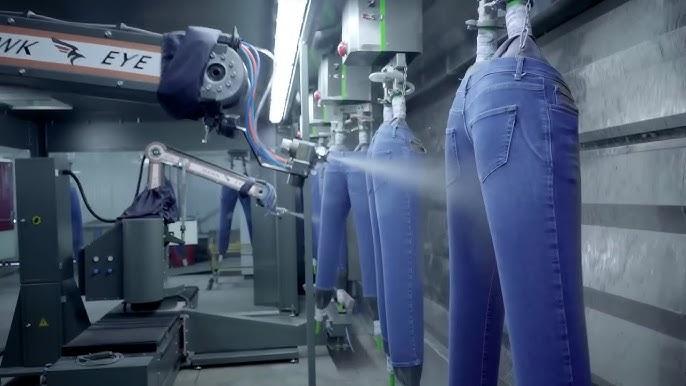
Jeans are the most universally worn garment on earth.
They transcend gender, age, culture, socioeconomic class, and geography. They're worn in boardrooms and barnyards, on runways and construction sites, in Tokyo and Texas. Levi Strauss patented the first pair in 1873, and 151 years later, denim remains the single most dominant fabric in casual fashion.
The global denim jeans market exceeds $65 billion annually — and it's still growing.
But behind every pair of jeans — from $15 fast-fashion basics to $400 selvedge masterpieces — lies a jeans production process of remarkable complexity. Understanding this process is essential for anyone considering launching a denim brand, adding jeans to an existing clothing line, or simply appreciating the craftsmanship behind what seems like a simple pair of pants.
The Jeans Production Process: Step by Step
Jeans production involves approximately 15–20 distinct stages, each requiring specialized equipment, materials, and expertise. Here's what happens from raw cotton to finished product:
Stage 1: Denim Fabric Production
Before jeans production can begin, the denim fabric itself must be created:
Fiber Selection
Most denim is made from 100% cotton, though modern denim increasingly incorporates:
- Elastane/Spandex (1–5%) — Adds stretch for comfort and fit
- Polyester blends — Increases durability and reduces cost
- Tencel/Lyocell — Adds softness and moisture management
- Recycled cotton — Reduces environmental impact
- Hemp blends — Eco-friendly, durable alternative
Spinning
Cotton fibers are spun into yarn. The spinning method affects the final denim's character:
- Ring-spun yarn — Creates irregular texture, prized in premium denim for its character and vintage feel
- Open-end (rotor) spun — Faster, cheaper production with a more uniform (but less character-rich) result
Dyeing
The warp yarn (vertical threads) is dyed with indigo — the iconic blue color of jeans. The dyeing process is what gives denim its characteristic fading properties:
- Indigo molecules sit on the surface of the yarn rather than penetrating fully
- This is why jeans fade with wear — the surface dye wears away, revealing the undyed cotton core beneath
- Rope dyeing (dipping yarns through indigo baths 6–16 times) produces the deepest, most consistent color
- Sulfur dyeing is used for black, gray, and other non-indigo denim colors
Weaving
Denim is woven in a 3x1 twill weave — one weft thread passes over three warp threads, creating the diagonal ribbing pattern visible on all denim. This twill structure gives denim its strength, drape, and distinctive appearance.
- Shuttle loom (selvedge) denim — Woven on old-style narrow looms that create a self-finished ("self-edge") on both sides of the fabric. Selvedge denim is prized by denim enthusiasts for its quality and heritage character. Limited production capacity makes it more expensive.
- Projectile loom denim — Modern wide looms that produce fabric much faster and more affordably. The vast majority of commercial jeans use projectile-woven denim.
Finishing
Raw denim is finished through various processes:
- Sanforizing — Pre-shrinking the fabric to minimize future shrinkage
- Mercerizing — Chemical treatment that adds luster and strength
- Brushing/sanding — Creates softer hand feel
- Coating — Waxes, resins, or polymers for specific looks and performance
Stage 2: Design and Pattern Making
Before cutting begins, the jeans must be designed:
Fit Development
The fit is arguably the most critical element of any jean. Common fits include:
- Skinny
- Slim
- Straight
- Regular/classic
- Relaxed
- Wide-leg
- Bootcut
- Boyfriend/girlfriend
- Mom/dad
- Tapered
- Flare
Each fit requires its own pattern — the technical blueprint that determines every seam, curve, and proportion of the garment.
Pattern Grading
A base pattern (usually in a size medium/32) is "graded" — mathematically scaled up and down — across the entire size range. This requires expertise because proportions don't scale linearly. A size 24 waist isn't simply a scaled-down size 34 — the hip-to-waist ratio, thigh circumference, and rise proportions all change.
Tech Pack Creation
A comprehensive tech pack documents every specification:
- Measurements for every size
- Fabric specifications
- Thread color and type
- Hardware (rivets, buttons, zippers) specifications
- Wash and finish instructions
- Label and tag placement
- Stitch type and density for each seam
Stage 3: Cutting
Marker Making
A marker — the layout of pattern pieces arranged to minimize fabric waste — is created digitally using CAD software. Expert marker making can achieve fabric utilization of 85–92%, while poor layouts waste significant material.
Spreading
Multiple layers of denim are spread on cutting tables — sometimes 50–100 layers deep — ensuring consistent tension and alignment.
Cutting
Pattern pieces are cut using:
- Automated CNC cutting machines (computer-controlled, extremely accurate, used in modern production)
- Band knife machines (manual, used in smaller operations)
- Die-cut presses (for small parts like belt loops and pocket facings)
A single pair of jeans typically requires 10–15 separate fabric pieces.
Stage 4: Sewing
This is the most labor-intensive stage of jeans production. A single pair of jeans requires approximately 50–70 individual sewing operations, including:
- Fly construction (zipper or button-fly)
- Front pocket bag attachment
- Coin pocket construction
- Back pocket attachment (often with decorative stitching)
- Side seam assembly
- Inseam assembly
- Waistband construction and attachment
- Belt loop creation and attachment
- Hem finishing
- Bartacking (reinforcement stitching at stress points)
- Rivet attachment
Each operation may use a different machine:
- Single-needle lockstitch — For topstitching and detail work
- Double-needle chain stitch — For structural seams
- Overlock (serger) — For seam finishing and edge sealing
- Bartack machine — For reinforcement at stress points
- Rivet machine — For metal rivet attachment
- Button-hole and button-attach machines — For waistband closures
Skilled operators perform each operation in 15–45 seconds, with an entire pair of jeans requiring 15–25 minutes of total sewing time in an efficient production line.
Stage 5: Washing and Finishing
This is where jeans get their final look and feel. The wash process transforms rigid, dark denim into the specific shade, softness, and character the brand envisions.
Common Wash Techniques:
| Technique | Effect |
|---|---|
| Stone wash | Pumice stones tumble with jeans, abrading the surface for a worn look |
| Enzyme wash | Cellulase enzymes break down surface fibers for a softer, cleaner fade |
| Acid wash | Chlorine-soaked pumice creates high-contrast, mottled fading |
| Bleach wash | Sodium hypochlorite lightens the denim uniformly or in targeted areas |
| Laser finishing | Computer-controlled lasers create precise fade patterns, whiskers, and distressing without chemicals or water |
| Ozone treatment | Ozone gas fades and softens denim with minimal water usage |
| Sand/hand sanding | Manual abrasion for targeted fading (whiskers, honeycombs, seat wear) |
| Resin treatment | Coatings that create 3D creasing effects and stiffness |
| Tinting/overdyeing | Adding color on top of the base indigo for cast effects (sulfur top, tinting) |
Stage 6: Quality Control and Finishing
- Button and rivet inspection
- Seam integrity checking
- Measurement verification against tech pack specifications
- Wash consistency grading
- Thread trimming and cleaning
- Final pressing and presentation
- Label attachment (care labels, brand labels, size tags)
- Hang tag and packaging
The Sustainability Revolution in Jeans Production
Traditional jeans production is resource-intensive:
- A single pair of conventional jeans uses approximately 1,800 gallons of water
- Indigo dyeing and chemical washing contribute to water pollution
- Cotton farming accounts for 16% of global insecticide use
The industry is responding aggressively:
- Laser finishing replacing manual sanding and chemical washes (reducing water use by up to 90%)
- Ozone technology replacing bleach treatments
- Recycled cotton and post-consumer denim fibers entering the supply chain
- Organic cotton cultivation eliminating pesticides
- Waterless and low-water dyeing technologies
- Closed-loop water treatment in wash houses
- Renewable energy in manufacturing facilities
Private Label Jeans Production: Building Your Denim Brand
Launching a jeans brand without owning a factory is not only possible — it's the standard model for the majority of denim brands on the market today. Private label jeans production allows brands to:
- Develop custom fits, washes, and designs
- Choose from hundreds of denim fabrics
- Specify hardware, trims, and branding details
- Receive samples for approval before bulk production
- Start with manageable order quantities
- Scale production as the brand grows
The critical factor is choosing a manufacturer that understands the complexity and specialization of jeans production — not a general apparel factory that happens to also make jeans.
Your Denim Vision, Expertly Manufactured
Jeans production is one of the most technically demanding categories in apparel manufacturing. The difference between a mediocre pair and an exceptional pair lies in the details — the fabric, the fit, the stitching, the wash, the hardware, the finishing. Vel Clothing is a private label clothing manufacturer with deep expertise in jeans production. From premium selvedge to stretch denim, from raw indigo to vintage washes, from skinny fits to wide-leg silhouettes — Vel Clothing handles every stage of production with precision and care. Custom fabric sourcing, expert pattern making, skilled sewing, advanced wash and finishing capabilities, and full branding services. Low minimums for emerging denim brands, scalable capacity for established labels, and uncompromising quality at every price point. Build the jeans brand you've always envisioned — contact Vel Clothing for a free consultation, fabric swatches, and sample development today.

 English
 Arabic
 French
 Spanish
 Deutsch
 Turkish
 Dutch
Dutch
 Italiano
 Russian
 Romaian
 Portuguese (Brazil)
 Greek
Greek