


DHCP & Network Configuration: Simplifying IP Management in Modern Networks
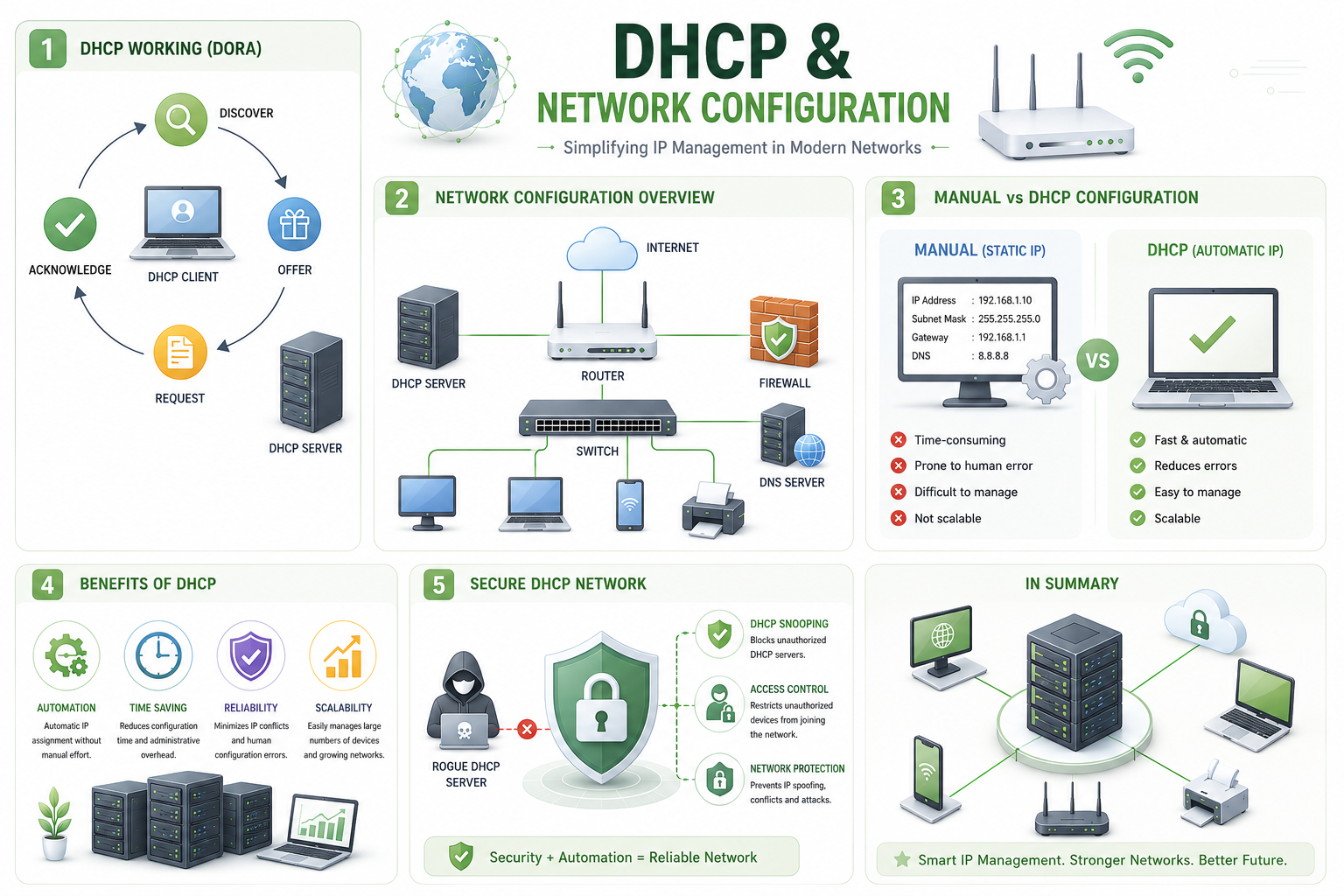
In today’s fast-paced digital world, seamless network connectivity is not just a luxury—it’s a necessity. Whether it’s a home network, a corporate environment, or a large-scale data center, managing IP addresses efficiently is crucial for smooth communication between devices. This is where DHCP (Dynamic Host Configuration Protocol) and network configuration play a vital role.
DHCP is a network management protocol used to automatically assign IP addresses and other essential network parameters—such as subnet mask, default gateway, and DNS servers—to devices on a network. Without DHCP, network administrators would need to manually configure each device, which is not only time-consuming but also prone to human error. With DHCP, devices can join a network and start communicating almost instantly, making it a cornerstone of modern networking.
When a device connects to a network, it sends a request to the DHCP server. The server responds by offering an available IP address along with other configuration details. This process, often referred to as the DORA process (Discover, Offer, Request, Acknowledge), ensures that each device receives a unique IP address without conflicts. This automated approach significantly reduces administrative overhead and enhances network efficiency.
Network configuration goes hand in hand with DHCP. It involves setting up and managing network components such as routers, switches, and firewalls to ensure optimal performance and security. Proper configuration ensures that data packets are routed correctly, network resources are accessible, and security policies are enforced. When combined with DHCP, it creates a robust and scalable networking environment.
One of the major advantages of DHCP is its flexibility. It allows administrators to define IP address ranges, lease durations, and reservation policies. For example, critical devices like servers or printers can be assigned fixed IP addresses through DHCP reservations, while other devices receive dynamic addresses. This balance between automation and control makes DHCP highly versatile.
Security is another important aspect to consider. While DHCP simplifies network management, improper configuration can lead to vulnerabilities such as unauthorized access or rogue DHCP servers. Implementing security measures like DHCP snooping and access control lists can help mitigate these risks and ensure a secure network environment.
In conclusion, DHCP and network configuration are fundamental components of any modern network. They not only simplify IP address management but also enhance scalability, efficiency, and security. Understanding how DHCP works and how to configure networks effectively is essential for anyone involved in IT and networking. As networks continue to grow in complexity, mastering these concepts will remain a valuable skill for building and maintaining reliable digital infrastructure.

 English
 Arabic
 French
 Spanish
 Portuguese
 Turkish
 Dutch
Dutch
 Italiano
 Russian
 Romaian
 Portuguese (Brazil)
 Greek
Greek