


Retail Loan Guide 2026: Meaning, Types, Features & Eligibility Criteria
Retail loans are a core part of modern banking in India, enabling individuals to meet personal financial needs without depleting their savings. From buying a house to managing emergencies, retail loans provide structured access to funds with flexible repayment options. This 2026 guide explains the meaning of retail loans, their types, key features, and eligibility criteria in a clear and beginner-friendly way.
Meaning of Retail Loan
A retail loan is a financial product offered by banks and non-banking financial companies (NBFCs) to individuals for personal use. Unlike corporate loans that are issued to businesses, retail loans are designed to fulfill individual financial requirements such as housing, education, travel, or consumption.
Retail loans are usually repaid through Equated Monthly Installments (EMIs) over a fixed tenure. Depending on the nature of the loan, they may be secured (backed by collateral) or unsecured (without collateral).
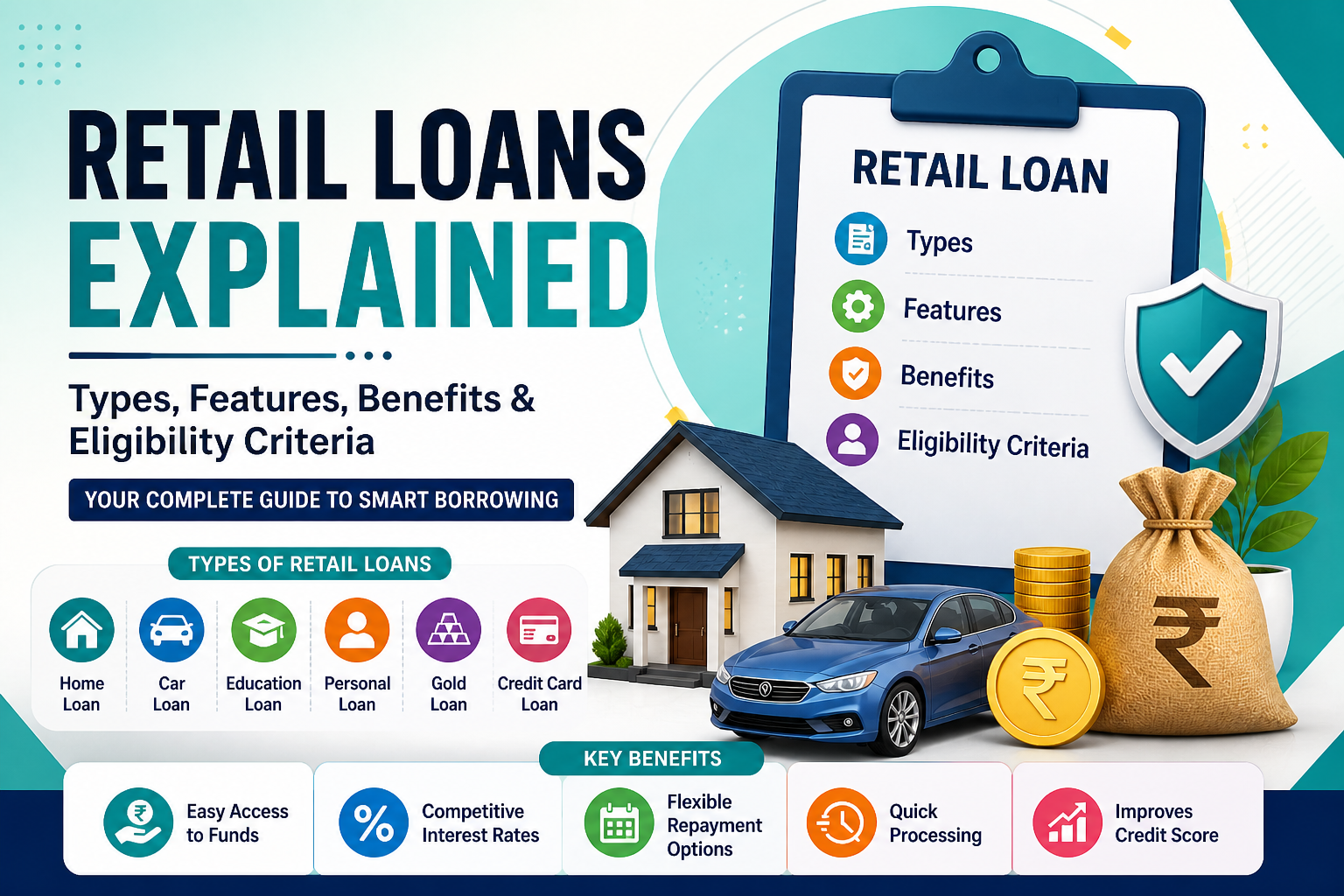
Types of Retail Loans
1. Home Loan
Home loans are used to purchase, construct, or renovate residential property. They generally offer lower interest rates and longer repayment periods.
2. Personal Loan
Personal loans are unsecured loans that can be used for multiple purposes such as medical emergencies, weddings, or travel. These loans are easy to access but may carry higher interest rates.
3. Car Loan
Car loans help individuals purchase new or used vehicles. The vehicle serves as collateral until the loan is fully repaid.
4. Education Loan
Education loans are designed to finance higher education expenses, including tuition fees, accommodation, and study materials.
5. Gold Loan
Gold loans are secured loans where borrowers pledge gold jewelry as collateral. These loans are known for quick processing and relatively lower interest rates.
6. Credit Card Loan
Credit card loans are pre-approved loans offered to existing credit card users for short-term financial needs with fast disbursal.
Key Features of Retail Loans
EMI-Based Repayment
Retail loans are repaid in fixed monthly installments, making it easier for borrowers to manage their finances.
Flexible Tenure
Loan tenures vary from a few months to several years, depending on the type of loan and borrower preference.
Fixed and Floating Interest Rates
Borrowers can choose between fixed interest rates, which remain constant, or floating rates that change based on market conditions.
Quick Processing
Many retail loans, especially personal and gold loans, are approved quickly with minimal documentation.
Secured and Unsecured Options
Retail loans offer both secured and unsecured options, allowing borrowers to choose based on their needs and financial situation.
Benefits of Retail Loans
Easy Access to Funds
Retail loans provide quick financial support for various personal needs.
Helps Achieve Financial Goals
They enable individuals to achieve major life goals such as buying a home, purchasing a vehicle, or funding education.
Improves Credit Score
Timely repayment of EMIs helps build a strong credit history and improves creditworthiness.
Flexible Usage
Certain loans like personal loans can be used for multiple purposes without restrictions.
Convenience
With digital applications and faster approvals, retail loans have become highly convenient for borrowers.
Eligibility Criteria for Retail Loans
Eligibility may vary depending on the lender and loan type, but common requirements include:
Age
Applicants are generally required to be between 21 and 60 years.
Income Stability
A stable income source is necessary to ensure repayment capacity. Both salaried and self-employed individuals are eligible.
Credit Score
A good credit score, usually 700 or above, improves the chances of loan approval and better interest rates.
Employment Status
Applicants must have a steady job or business with consistent income.
Documentation
Basic documents required include:
- Identity proof (Aadhaar card, PAN card)
- Address proof
- Income proof (salary slips, bank statements, ITR)
- Employment or business details
Tips Before Applying for a Retail Loan
- Compare interest rates from different lenders
- Check processing fees and additional charges
- Evaluate your repayment capacity carefully
- Choose a suitable loan tenure
- Read all terms and conditions before applying
Conclusion
Retail loans are an essential financial tool that helps individuals meet their personal needs efficiently. With a wide range of loan options, flexible features, and easy accessibility, retail loans continue to play a significant role in financial planning in 2026. However, borrowers should always make informed decisions, understand the loan terms, and ensure timely repayment to maintain financial stability.

 English
 French
 Spanish
 Portuguese
 Deutsch
 Turkish
 Dutch
Dutch
 Italiano
 Russian
 Romaian
 Portuguese (Brazil)
 Greek
Greek