


Breakthrough in Pure Math: Russian Researcher Unveils New Path Through a 190-Year-Old “Eternal” Equation Problem
A Russian mathematician has introduced a powerful new approach to one of mathematics’ most enduring challenges—a class of equations that has resisted a universal solution for nearly two centuries.
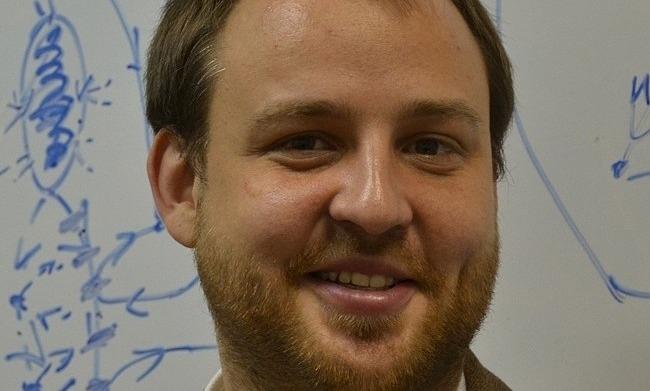
Ivan Remizov, a senior researcher at the Higher School of Economics (HSE), has developed a novel method for analyzing second-order differential equations, a foundational tool used to model real-world systems in physics, economics, and engineering. His findings were published in the Vladikavkaz Mathematical Journal, according to reports from HSE and Russian news agency TASS.
Second-order differential equations describe how systems evolve over time, governing phenomena such as the motion of a pendulum, electrical signals in power grids, and dynamic economic models. For almost 190 years, mathematicians have known that—unlike quadratic equations—there is no universal closed-form formula capable of solving these equations when their coefficients vary. As a result, researchers have relied heavily on numerical simulations or highly specialized solution methods.
Remizov’s work does not overturn this long-standing mathematical limitation. Instead, it reframes the problem by offering a new way to represent solutions using advanced tools from operator theory. His approach is rooted in Chernoff approximation theory, which simplifies a continuously evolving system into a sequence of small, manageable steps. As the number of steps increases, the approximation converges toward the exact solution—a process Remizov and his colleagues have shown occurs at a measurable and predictable rate.
The study further reveals that applying the Laplace transform to these approximations naturally leads to the resolvent operator, a central concept in differential equation theory. This insight provides a constructive, systematic pathway to solutions, even when those solutions cannot be expressed as finite formulas using elementary functions.
In practical terms, the method allows researchers to take a standard second-order equation of the form
ay′′ + by′ + cy = g
and obtain the solution function y through a clearly defined limiting process, rather than trial-and-error or brute-force computation.
Remizov earned his PhD from Moscow State University in 2018 and currently works at both the Higher School of Economics and the Institute for Problems in Mathematical Transmission of Information at the Russian Academy of Sciences. His research centers on approximation methods for operator semigroups, an area with deep and far-reaching connections to mathematical physics.
This breakthrough offers fresh momentum in a field long considered mathematically “eternal,” opening new analytical doors for both theoretical research and real-world modeling.

 English
 Arabic
 French
 Spanish
 Portuguese
 Deutsch
 Turkish
 Dutch
Dutch
 Italiano
 Romaian
 Portuguese (Brazil)
 Greek
Greek