


Basics of Industrial Steam Generation
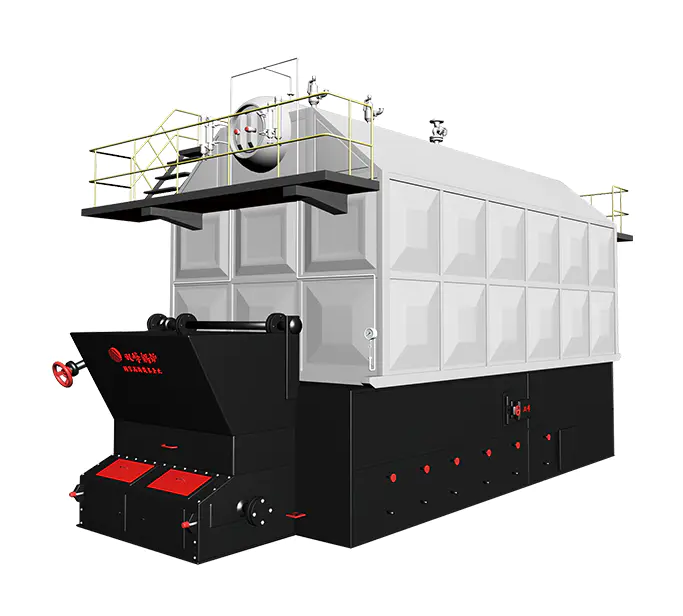
If your facility is located off the gas grid, or if you have access to low-cost byproducts like sawdust or coal, a Solid Fuel Steam Boiler might be a practical solution for your process heating needs. These systems convert potential energy locked in solid materials into usable steam for pressing, drying, or cleaning. However, they require a shift in mindset compared to turning on a gas valve.
The first consideration is fuel storage and handling. A Solid Fuel Steam Boiler cannot simply be plugged into a pipe; it needs a fuel yard or silo. For a 2,000 kg/hr system, you might require 300-500 kg of fuel per hour. This means you need space for a week's worth of fuel storage, protected from rain to prevent moisture damage. Manual feeding is possible for small units (sub-500 kg/hr), but larger industrial setups require mechanical conveyors (screw feeders or belt conveyors) to push the material into the firebox.
Operationally, the difference is the "thermal lag." When you increase the fuel feed rate on a Solid Fuel Steam Boiler, it takes minutes, not seconds, for the steam pressure to rise. This is because the solid fuel must ignite and form a glowing coal bed before releasing its energy. Consequently, these boilers are well-suited for consistent base loads rather than wildly fluctuating demands. For example, a textile factory with a steady demand of 5 tons per hour for 12 hours straight will find a solid fuel system efficient, whereas a batch process with frequent stops might struggle with fuel wastage during idle periods.
Maintenance is another factor. The ash produced by solid fuels must be removed regularly. A coal-fired unit might produce 10-15% ash by weight, requiring a mechanical de-ashing system. Biomass units produce lighter fly ash that can be carried out with the flue gases, necessitating a cyclone or bag filter to capture particulates before they exit the stack. Users should budget for grate replacement every 2-3 years, depending on the fuel's abrasiveness. Ultimately, the decision to choose a Solid Fuel Steam Boiler often comes down to simple economics: if the solid fuel is locally available for a fraction of the cost of oil or gas, the operational hassle is worth the financial savings.

 English
 Arabic
 French
 Portuguese
 Deutsch
 Turkish
 Dutch
Dutch
 Italiano
 Russian
 Romaian
 Portuguese (Brazil)
 Greek
Greek