


The Hidden Costs of Using Low-Grade Substrates for Electronics Reels
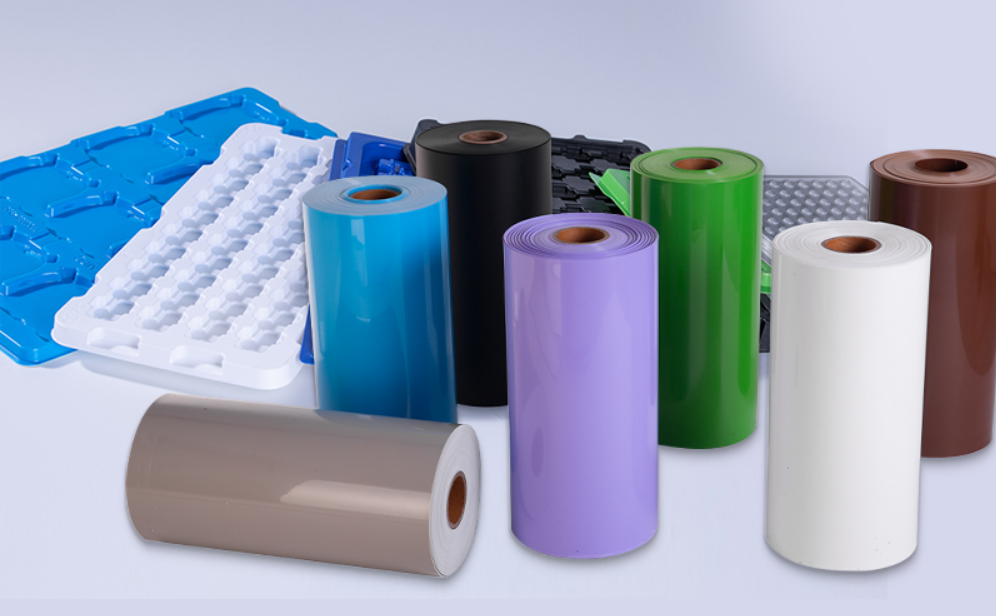
Q: We recently switched suppliers for our embossed carrier tape to save costs, but now our high-speed placement machine jams constantly. What changed?
A: You likely ran into an issue with the base Sheets for carrier tape quality. When you change suppliers, the mechanical properties of the raw material may change, even if the thickness looks the same. The two culprits are usually "camber" and "yield strength."
Camber refers to a lateral curvature along the length of the tape. Imagine a banana shape instead of a straight line. If the Sheets for carrier tape have internal residual stress from the extrusion process (uneven cooling), the resulting carrier tape will curve to one side. When the sprocket holes engage with the feeder gear, that curve forces the tape to rub against the side of the cover plate. We have seen feeders stop functioning correctly when camber exceeds 2mm per 250mm length.
Q: How do I verify if the sheet is causing the issues before it’s formed?
A: You need to look at the spec sheet for "Tensile Modulus" and "Elongation at Yield." For a standard embossed pocket for a 0603 chip, you need a material that stretches locally to form the pocket wall without thinning out too much. If the elongation is too low (say, below 150%), the pocket corners will crack, creating "angel hair" debris that contaminates the component lens.
Q: What is the standard for static protection?
A: The electronics industry generally follows ANSI/EIA-541. When reviewing Sheets for carrier tape, ask for the Surface Resistivity measured at 23°C and 50% RH. For sensitive MOSFETs or ICs, you require a dissipative range (10^6 to 10^9 Ω/sq). Many low-cost sheets are either too insulative (creating static charge as the component moves) or too conductive (creating a risk of sparking if the tape contacts a live circuit). The safe spot is usually a controlled dissipative layer.
Q: Any final advice on storage?
A: Yes. Even good Sheets for carrier tape can absorb moisture if stored improperly (exceeding 60% RH). When this formed tape goes through a pre-heat oven or a reflow process, that moisture turns to steam and warps the pockets. Always store your reels in a climate-controlled environment (0~40°C, <65% RH) and use them within a year of the manufacture date -10.

 English
 Arabic
 French
 Spanish
 Portuguese
 Deutsch
 Turkish
 Italiano
 Russian
 Romaian
 Portuguese (Brazil)
 Greek
Greek