


Electrical Control Architecture in HVAC System Design
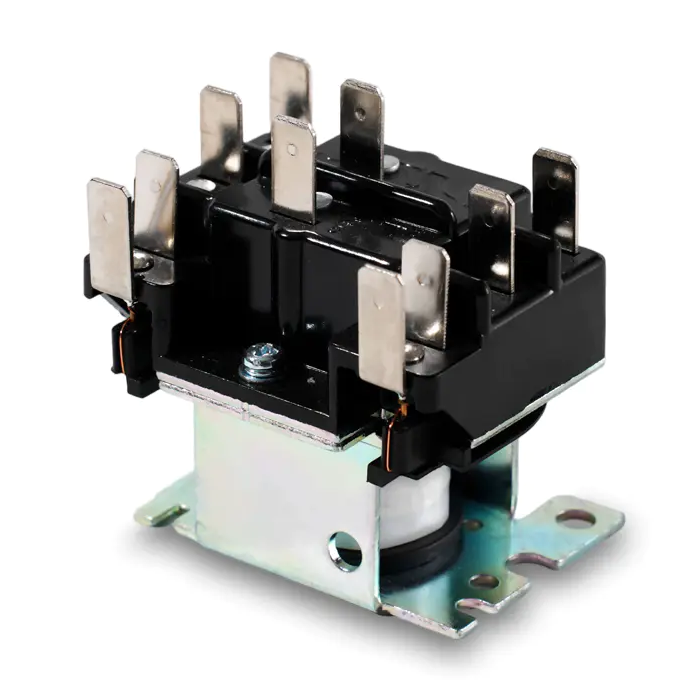
HVAC system design requires precise coordination between sensors, controllers, and power components. A fundamental part of this coordination is the HVAC Control Relay, which acts as a switching bridge between digital control logic and mechanical output systems.
In system design, relays are selected based on parameters such as:
Coil voltage: 5V, 12V, or 24V DC/AC
Contact rating: 10A–40A depending on load class
Insulation resistance: typically ≥100MΩ at 500V DC
Dielectric strength: often 1500V–2500V AC between coil and contacts
HVAC systems often separate control zones into low-voltage logic boards and high-voltage power sections. The HVAC Control Relay ensures galvanic isolation between these zones, reducing risk of electrical feedback into microcontroller circuits.
In heat pump systems, relays manage reversing valve coils operating at approximately 10W–15W power consumption, while compressor circuits may require relay-triggered contactors handling high inrush currents up to 6–8 times rated load current.
Energy efficiency improvements in modern HVAC systems also depend on relay switching optimization. Reduced coil power consumption—sometimes as low as 0.2W in latching relay designs—helps lower standby energy usage.
Design engineers also consider ambient operating conditions. HVAC control relays are often rated for -40°C to +85°C, ensuring stability in both outdoor condensers and indoor control panels.

 Arabic
 French
 Spanish
 Portuguese
 Deutsch
 Turkish
 Dutch
Dutch
 Italiano
 Russian
 Romaian
 Portuguese (Brazil)
 Greek
Greek