


Role of Plastic Oil Water Separator in Factory Waste Streams
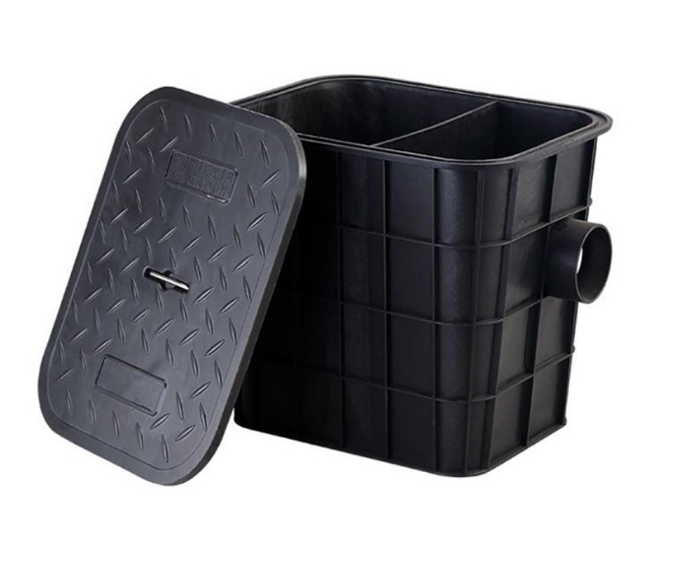
Manufacturing facilities generate wastewater containing cutting oils, hydraulic fluids, and lubricants. A Plastic Oil Water Separator is commonly installed to handle these waste streams before discharge or recycling.
In machining workshops and metal processing plants, influent flow rates vary from 2 m³/h in small workshops to over 300 m³/h in large production lines. The separator is designed to handle fluctuating loads by maintaining laminar flow conditions inside the separation chamber.
Plastic materials such as high-density polyethylene (HDPE) are preferred due to their resistance to coolant fluids and synthetic oils. These systems typically operate under atmospheric pressure with inlet temperature limits of up to 55°C–65°C.
Key structural components include:
Primary settling tank for heavy solids
Laminar flow channel for oil-water separation
Coalescing plate pack (spacing 10–20 mm)
Adjustable outlet weir for water discharge control
Oil droplets rise at a velocity governed by Stokes’ Law, while solids settle at the bottom sludge hopper. Sludge accumulation rates depend on machining intensity and may require removal every 2–4 weeks in high-production environments.
A Plastic Oil Water Separator in manufacturing settings helps reduce load on downstream filtration systems and improves compliance with discharge regulations. It also supports reuse of treated water in non-critical processes such as cleaning and cooling.
Due to modular design, systems can be expanded by adding additional separation modules in parallel when production capacity increases.

 English
 French
 Spanish
 Portuguese
 Deutsch
 Turkish
 Dutch
Dutch
 Italiano
 Russian
 Romaian
 Portuguese (Brazil)
 Greek
Greek