


Maintenance Practices for Industrial Chains
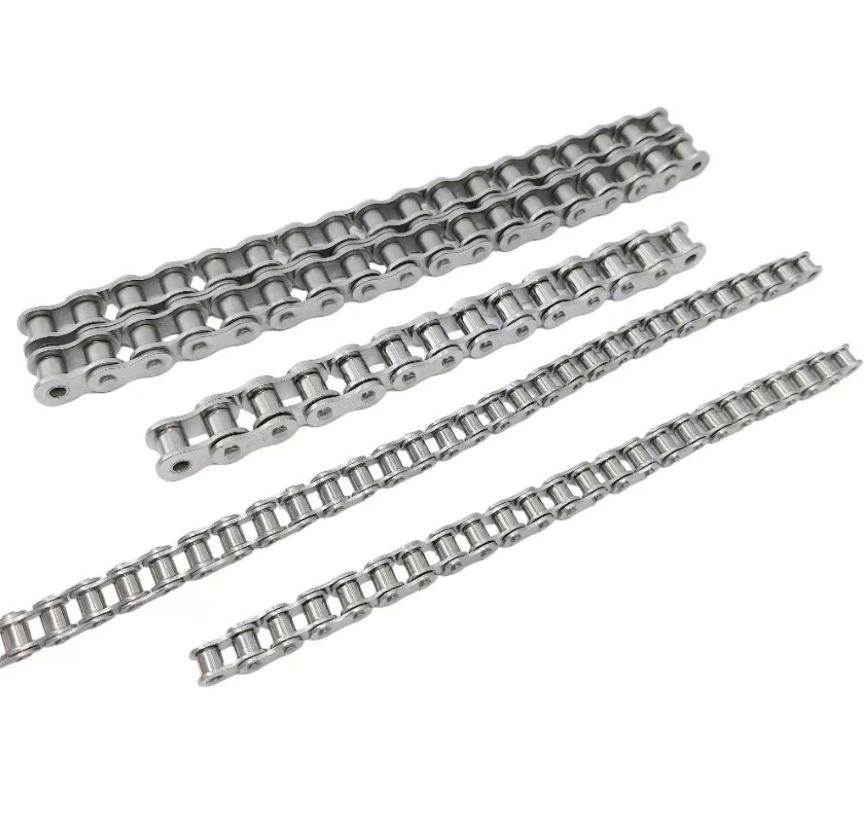
In industrial machinery, system reliability depends heavily on proper maintenance of mechanical components. The Heavy Roller Chain is a critical part of many drive systems, and its performance is directly influenced by lubrication, alignment, and load conditions.
Chain wear primarily occurs at the pin-bushing interface. Under typical operation, contact pressure can reach 20–40 MPa depending on load distribution. Without proper lubrication, this can accelerate surface fatigue and elongation.
Recommended lubrication viscosity ranges between ISO VG 68 and ISO VG 220 oils for most industrial applications. In high-temperature environments exceeding 80°C, synthetic lubricants are often preferred to maintain film stability.
Alignment tolerance between sprockets should generally remain within 0.5° angular deviation to prevent uneven load distribution across the chain width. Misalignment increases side plate stress and reduces fatigue life.
Heavy Roller Chain systems also benefit from periodic tension adjustment. Excess slack can lead to dynamic impact loads, while over-tight tension increases bearing stress. Optimal sag in horizontal drives is often maintained at 1%–2% of center distance.
Inspection intervals vary depending on operating conditions but are commonly set at 250–500 operating hours in continuous-duty systems.
Proper maintenance practices significantly extend operational life and reduce unplanned downtime in industrial environments.

 English
 Arabic
 French
 Spanish
 Portuguese
 Deutsch
 Dutch
Dutch
 Italiano
 Russian
 Romaian
 Portuguese (Brazil)
 Greek
Greek