


Why Drones Have Become the Deciding Factor in Modern Warfare
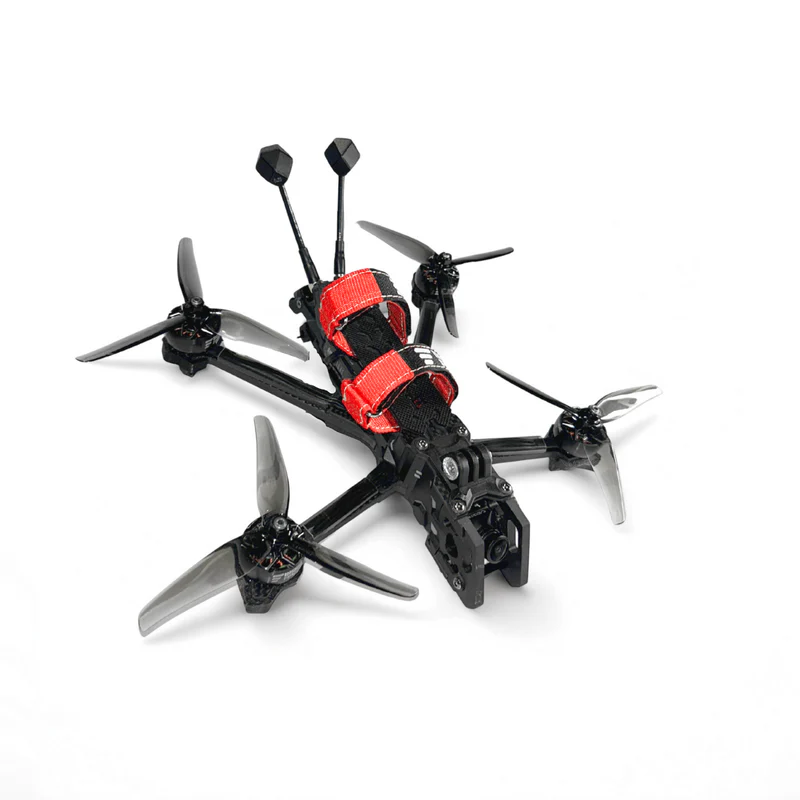
Drone warfare has moved from the margins to the centre of modern conflict. Once viewed mainly as tools for surveillance and intelligence gathering, drones now play a decisive role across land, air, and sea. Conflicts over the past decade, especially the war between Russia and Ukraine and recent developments in South Asia, show that drones are no longer supporting assets. They influence battlefield outcomes, shape military strategy, and drive defence policy decisions.
For India, this shift carries an unmistakable message. Strategic autonomy in drone manufacturing and counter drone systems is no longer optional. It is a requirement for national security. At InsideFPV, this understanding shapes the focus on innovation, domestic capability, and long term preparedness.
Why Drones Now Sit at the Centre of Warfare
Modern warfare rewards forces that can act quickly, strike accurately, adapt rapidly, and operate at manageable costs. Drones meet all these demands. Unlike traditional aircraft, they can fly at low altitudes, evade many radar systems, stay airborne for extended periods, and be replaced quickly when losses occur.
Their role now extends far beyond reconnaissance missions. Drones have become multi role platforms that influence nearly every aspect of combat operations. Today, drones are used for real time surveillance and battlefield mapping, allowing commanders to track enemy movement with precision. They conduct targeted attacks using loitering munitions that hover over an area until a target appears. Swarm tactics enable multiple drones to overwhelm air defences through sheer coordination rather than brute force.
Drones also support logistics by delivering supplies to contested zones, reducing risk to human operators. At sea, unmanned surface vehicles have been used to strike naval targets and disrupt shipping routes. In addition, drones are increasingly involved in electronic warfare by jamming communications and suppressing enemy air defence systems.
These capabilities allow even smaller or resource constrained forces to challenge conventional military power, changing long held assumptions about technological and numerical superiority.
Ukraine and the Case for Indigenous Manufacturing
The war between Russia and Ukraine marked a turning point in the global understanding of drone warfare. At the outset, Ukraine relied heavily on imported commercial drones, many of them sourced from China. These systems were vital for surveillance and targeting, but geopolitical shifts and supply chain disruptions quickly exposed the risks of dependence on foreign suppliers.
Faced with shortages, Ukraine adapted by developing domestic manufacturing capabilities. Local teams began assembling drones using widely available components and simple designs that could be modified quickly. This approach enabled rapid innovation and large scale production. Ukraine now produces drones in the millions each year, ranging from small first person view units to long range strike platforms.
Civilian drones originally designed for photography were repurposed for frontline intelligence gathering and precision targeting. The focus shifted from acquiring advanced systems to controlling the design and production process itself.
This experience offers two clear lessons. Control over manufacturing matters more than access to finished products. Flexibility and speed of iteration often outperform expensive and complex platforms. For India, which faces similar geopolitical risks, dependence on external suppliers during a crisis could prove costly.
Naval Drones and the New Maritime Battlefield
Unmanned systems are also reshaping naval warfare. Ukraine demonstrated this by challenging Russian naval dominance in the Black Sea using naval drones and domestically developed missiles, despite losing much of its traditional fleet early in the conflict.
Around the world, unmanned surface and underwater vehicles are being developed to support maritime surveillance, anti submarine operations, port security, and coordinated swarm based naval attacks. These systems reduce risk to personnel while extending reach and persistence in contested waters.
For India, with its long coastline and critical maritime interests, indigenous naval drone capability is especially important. Control over sea lanes, protection of ports, and monitoring of offshore assets all depend on reliable and adaptable unmanned systems designed for local conditions.
Turkey and China as Emerging Drone Powers
Turkey and China have emerged as major players in the global drone market by offering capable systems at competitive prices and with fewer export restrictions. Turkey’s success is rooted in a strong public private ecosystem. Domestic companies were encouraged to meet national defence requirements first, with exports following once systems matured.
China dominates the commercial drone supply chain and is a leading exporter of both civilian and military platforms. Its scale and cost advantages have made many countries dependent on Chinese hardware, from airframes to critical electronic components.
For India, this level of dependence creates strategic vulnerability. Supply disruptions, political pressure, or conflict could restrict access to essential systems and parts at critical moments. Reducing this exposure requires building domestic capacity across design, manufacturing, and component production.
Lessons from the India Pakistan Conflict
Recent tensions between India and Pakistan highlighted how drone warfare is evolving closer to home. Pakistan deployed large numbers of drones using swarm tactics supported by foreign technology. India responded with precision drone strikes and a layered air defence network designed to counter multiple threats simultaneously.
The outcome revealed important insights. Numbers alone do not guarantee success. Integrated defence systems perform better than isolated solutions. Precision, coordination, and discipline matter more than saturation attacks.
India’s interception rate demonstrated the effectiveness of layered counter drone systems combined with trained operators and clear command structures. This approach proved more reliable than relying solely on large volumes of attacking platforms.
India Drone Ecosystem Progress and Gaps
India has made steady progress in building its drone ecosystem in recent years. Regulatory reforms and targeted government missions have encouraged private sector participation. Indigenous systems are now operational across surveillance, loitering munitions, and maritime roles.
Key developments include the deployment of indigenous loitering and medium altitude long endurance drones, stronger public private collaboration in manufacturing, and the introduction of naval unmanned systems for maritime surveillance. Startups have played a growing role in developing sensors, payloads, and autonomy software tailored to Indian requirements.
Despite these advances, challenges remain. Cost competitiveness is a major issue, particularly when compared to mass produced foreign systems. Many Indian platforms still rely on imported components, especially in electronics, propulsion, and batteries. Achieving true self reliance requires building domestic capability across the entire supply chain, from raw materials to final assembly.
The Growing Threat from Non State Actors
One of the most serious risks associated with drone proliferation is accessibility. Commercial drones that cost only a few thousand dollars can be modified for combat roles with relative ease. This has enabled militant groups, criminal networks, and insurgents to conduct attacks, surveillance, and smuggling operations.
Several factors contribute to this risk. Global regulation of drone sales remains uneven. Many technologies are dual use, meaning they have both civilian and military applications. Modifying commercial drones for hostile purposes requires limited expertise and equipment.
As a result, counter drone solutions are now as important as offensive capabilities. Protecting borders, cities, and critical infrastructure requires systems that can detect, track, and neutralise hostile drones without causing collateral damage. Defence drones in India are rapidly transforming modern warfare with advanced surveillance, reconnaissance, and strike capabilities.
Conclusion
The central lesson from recent global conflicts is clear. Drone warfare evolves faster than traditional defence procurement cycles. Dependence on external suppliers creates strategic risk, especially during times of crisis. Nations that control their own design, manufacturing, and iteration processes adapt more quickly and retain operational freedom.
For India, indigenisation is not about isolation. It is about resilience. Domestic manufacturing allows faster upgrades, better integration with local doctrine, and independence from shifting geopolitical alignments.
At InsideFPV, this belief guides a focus on indigenous design and real world operational needs. Building drones in India is not just an industrial ambition. It is a strategic necessity.
Frequently Asked Questions
Why is indigenous drone manufacturing important for India
Domestic manufacturing reduces dependence on foreign suppliers, ensures continuity during conflict, and allows systems to be tailored and upgraded for Indian operational needs.
How did the Russia Ukraine war change drone warfare
It showed large scale use of drones across all domains, highlighted rapid domestic production, and demonstrated how commercial drones can be adapted for combat roles.
Are drones replacing fighter aircraft
Drones are not replacing traditional air power. They complement it by offering cost effective precision, persistence, and flexibility in contested environments.
What role do counter drone systems play
Counter drone systems protect civilian and military infrastructure from surveillance, attacks, and swarm threats, making them essential for modern national security.

 English
 Arabic
 French
 Spanish
 Portuguese
 Deutsch
 Turkish
 Dutch
Dutch
 Italiano
 Russian
 Portuguese (Brazil)
 Greek
Greek