


Digitizing Designs for Machine Embroidery Explained
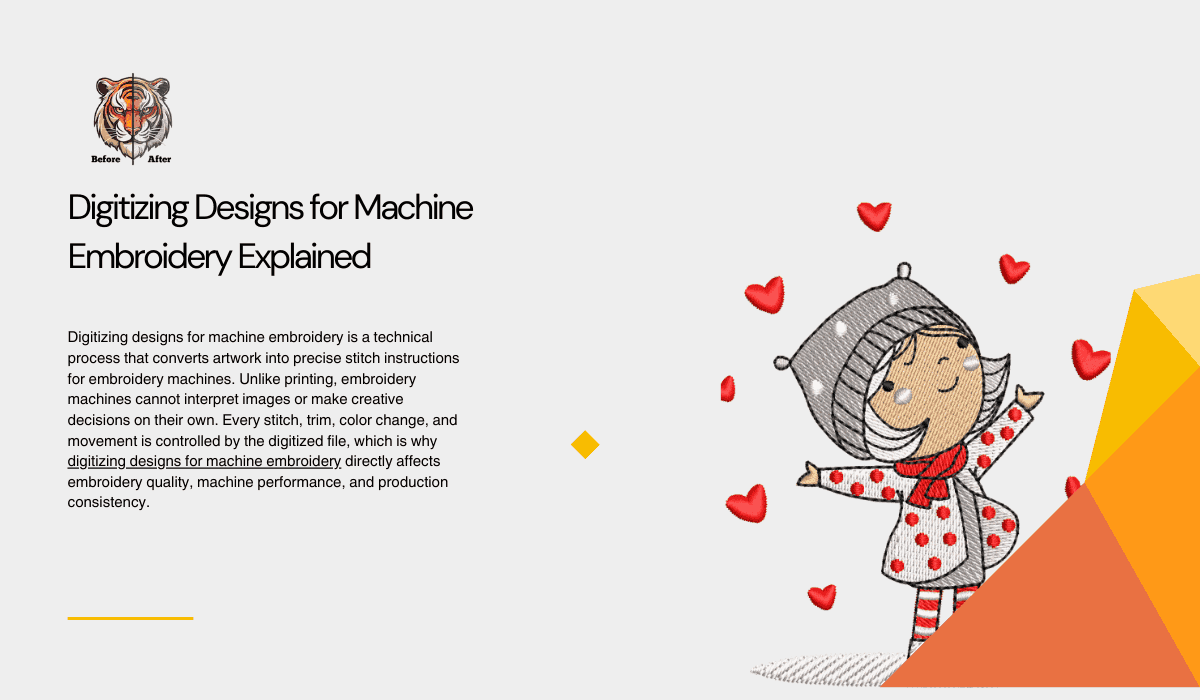
Digitizing designs for machine embroidery is a technical process that converts artwork into precise stitch instructions for embroidery machines. Unlike printing, embroidery machines cannot interpret images or make creative decisions on their own. Every stitch, trim, color change, and movement is controlled by the digitized file, which is why digitizing designs for machine embroidery directly affects embroidery quality, machine performance, and production consistency.
Understanding this process helps businesses reduce errors, avoid material waste, and maintain consistent embroidery results across different garments and machines.
What Digitizing Means in Machine Embroidery
Digitizing is the manual creation of stitch paths based on artwork requirements. It is not simple image conversion. A digitizer decides how the machine will move, which stitch types will be used, and how stitches will interact with fabric.
Each decision impacts how the design looks after stitching and how smoothly the embroidery machine runs during production.
Role of Artwork in Digitizing Accuracy
Artwork quality sets the foundation for successful digitizing. Clear outlines, proper sizing, and well-defined shapes allow digitizers to plan clean stitch paths.
Poor or pixelated artwork often leads to excessive stitches, uneven borders, and embroidery distortion, even if the machine itself is high quality.
Stitch Types and Their Purpose
Different areas of a design require specific stitch types. Digitizers select stitches based on design size, shape, and durability requirements.
Satin stitches are commonly used for lettering and borders, while fill stitches cover larger areas. Running stitches support fine details and outlines. Using the correct stitch type improves embroidery stability and appearance.
Stitch Direction and Tension Control
Stitch direction controls how light reflects on embroidery and how fabric reacts during stitching. Incorrect stitch angles can cause fabric pull or uneven surfaces.
Digitizing designs for machine embroidery involves careful stitch direction planning to maintain balance and reduce thread tension issues during production runs.
Importance of Underlay Stitches
Underlay stitches form the base layer of embroidery. They stabilize fabric and support top stitches.
Proper underlay selection helps prevent puckering, improves coverage, and allows top stitches to sit evenly on the garment, especially on stretchy or thick fabrics.
Fabric-Specific Digitizing Adjustments
Different fabrics respond differently to stitching. Knit fabrics require different density settings than woven materials, while caps and jackets need special handling due to structure and thickness.
Professional digitizing adjusts stitch density, pull compensation, and underlay based on fabric type to ensure reliable embroidery results.
Machine Compatibility and File Structure
Digitized files must be compatible with commercial embroidery machines. This includes correct file formats, stitch limits, and color sequencing.
Accurate digitizing ensures machines operate smoothly without unnecessary stops, thread breaks, or misalignment issues during stitching.
Testing and Quality Review
Before final delivery, digitized designs are reviewed for both visual accuracy and technical performance. Stitch count, edge smoothness, and stitch transitions are checked carefully.
This review process helps reduce revisions and supports consistent embroidery during bulk production.
Benefits of Professional Digitizing for Businesses
Professional digitizing designs for machine embroidery improve production efficiency. Businesses experience fewer machine errors, reduced fabric waste, and consistent logo appearance across all products.
For branded apparel, uniforms, and promotional items, professional digitizing is essential for maintaining quality standards.
Conclusion
Digitizing designs for machine embroidery is the foundation of reliable embroidery production. From artwork preparation to stitch planning, fabric adjustment, and testing, each step determines how a design performs on the machine.
Businesses that invest in proper digitizing achieve cleaner embroidery, stable production, and consistent results across every order.
FAQs
Is digitizing required for all machine embroidery?
Yes. Embroidery machines require digitized stitch files to operate.
Can embroidery machines fix poor digitizing automatically?
No. Machines only follow the instructions provided in the stitch file.
Does digitizing affect embroidery durability?
Yes. Proper stitch planning improves durability and wash performance.
Is digitizing the same for all fabrics?
No. Fabric type directly influences stitch density, underlay, and compensation settings.

 English
 Arabic
 French
 Spanish
 Portuguese
 Deutsch
 Turkish
 Dutch
Dutch
 Italiano
 Romaian
 Portuguese (Brazil)
 Greek
Greek