


A Concluding Outlook on the Strategic Quantum Communication Market
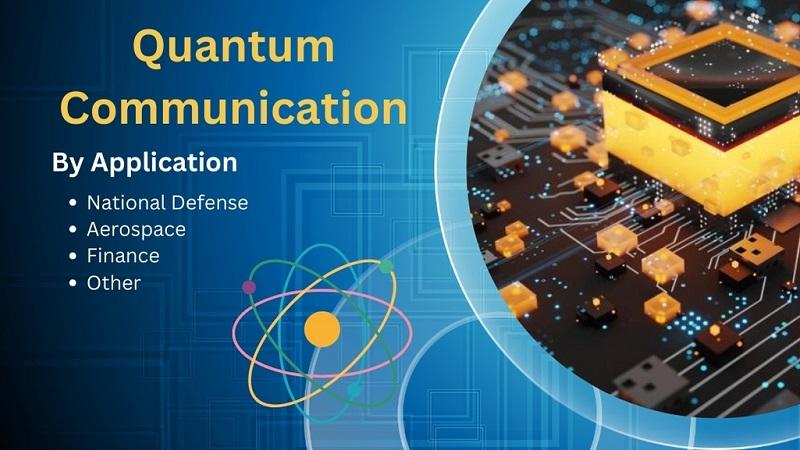
In the final analysis, the global Quantum Communication Market represents a profound and strategic shift in our approach to information security, moving from a reliance on mathematical complexity to a foundation built upon the fundamental laws of physics. The industry has successfully transitioned from a realm of theoretical physics experiments to a nascent but tangible commercial reality, with real-world networks being deployed to protect the most sensitive data of governments and financial institutions. Its core value proposition—the ability to provide "forward-secure" communication that is immune to future advances in computing—is not just an incremental improvement but a paradigm shift that addresses the existential threat posed by the development of quantum computers. While still in its early stages, the quantum communication industry is laying the groundwork for the next generation of secure global infrastructure, a task of immense strategic importance for national security, economic stability, and the future of digital privacy in the 21st century. The work being done today is not just about building a niche security product; it's about building the foundations of a quantum-safe world.
The future trajectory of the market will be defined by a relentless effort to overcome the current technological limitations that constrain its widespread adoption. The primary focus of research and development will be on extending the range, increasing the speed, and reducing the cost of quantum communication systems. The holy grail for long-distance terrestrial communication is the development of a functional "quantum repeater." Unlike a classical amplifier, a quantum repeater must use complex techniques like entanglement swapping and quantum error correction to regenerate a quantum signal without destroying it, a feat that is still a major research challenge. In parallel, the industry will continue to push the boundaries of satellite-based QKD to create a global quantum network. On the commercial front, the focus will be on miniaturization and integration—moving from bulky, lab-based equipment to compact, rack-mountable, and eventually chip-scale devices that can be easily integrated into existing telecommunication infrastructure. This drive for performance, distance, and cost-effectiveness will be the key to moving quantum communication from a high-end niche to a more broadly deployed security solution.
The competitive landscape of the future will likely be a hybrid one, where quantum communication does not entirely replace classical cryptography but works in concert with it. The most significant near-term competition comes from Post-Quantum Cryptography (PQC), which are new classical algorithms designed to be resistant to quantum attacks. PQC has the major advantage of being a software-based solution that can run on existing hardware. For many applications, a PQC solution will likely be deemed "good enough" and far more cost-effective to deploy. Therefore, the future of secure networking will likely involve a multi-layered approach. QKD will be used to secure the most critical, high-value backbone links where the highest level of physical assurance is required, providing a provably secure channel for distributing the keys that are then used by the faster and more flexible PQC algorithms to encrypt the actual data traffic. The ability of quantum communication vendors to seamlessly integrate their platforms with emerging PQC standards will be crucial for their commercial success.
Ultimately, the significance of the quantum communication market extends far beyond just security. It is the first step towards building a true "Quantum Internet." Such a network, capable of generating, processing, and transmitting quantum information between distant nodes, would unlock a host of revolutionary applications that are impossible today. It would enable distributed quantum computing, create ultra-precise global sensor networks, and allow for fundamentally new scientific experiments. While this grand vision is still decades away, the work being done today in developing the components, protocols, and networks for quantum communication is the essential groundwork upon which this future will be built. The industry is therefore not just selling a security solution for today's problems; it is building the foundational infrastructure for the next information technology revolution—a revolution that promises to be as transformative as the classical internet has been for our time.
Explore More Like This in Our Regional Reports:
South Korea AI Meeting Assistants Market

 English
 Arabic
 French
 Spanish
 Portuguese
 Deutsch
 Turkish
 Dutch
Dutch
 Italiano
 Russian
 Romaian
 Greek
Greek