


Steel Pipes and Tubes Market Analysis: Global Trade Impact
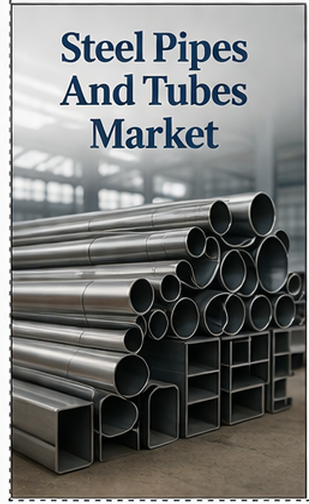
The global steel pipes and tubes industry is entering a phase of sustained expansion, driven by infrastructure modernization, energy transition, and advanced manufacturing demand. As industrial ecosystems become more interconnected and performance-driven, steel pipes and tubes are no longer viewed as basic commodities but as engineered solutions essential for reliability, durability, and efficiency across sectors.
According to a report published by Grand View Research, the global steel pipes & tubes market size is projected to reach USD 209.89 billion by 2033, growing at a CAGR of 6.0% from 2026 to 2033. This steady growth reflects a combination of structural demand and evolving technological requirements across industries.
Infrastructure Expansion Driving Core Demand
One of the most influential trends shaping the steel pipes and tubes market is large-scale infrastructure investment. Governments across emerging economies—particularly in Asia-Pacific—are prioritizing highways, railways, smart cities, and water distribution systems. These projects require high volumes of durable piping systems for structural support, drainage, and utility transport.
Urbanization is another critical factor. As cities expand, the demand for water supply networks, sewage systems, and district heating pipelines increases significantly. Steel pipes and tubes, known for their strength and long service life, are widely preferred in such applications. In fact, Asia-Pacific alone accounts for over 60% of the global market share, underscoring the region’s dominance in construction and industrial growth.
Energy Sector and Pipeline Modernization
The oil and gas sector continues to be a cornerstone of demand for steel pipes and tubes. From upstream exploration to midstream transportation and downstream refining, pipelines remain critical infrastructure. High-pressure, corrosion-resistant steel pipes are essential for transporting crude oil, natural gas, and LNG across long distances.
In addition, the global shift toward cleaner energy is opening new opportunities. Hydrogen pipelines, carbon capture systems, and gas-based power generation projects are driving demand for advanced steel tubing solutions. These applications require enhanced material properties, including resistance to extreme temperatures and chemical exposure.
A key takeaway often highlighted in industry analyses is that energy infrastructure is evolving rather than declining—ensuring long-term relevance for steel pipes and tubes in both conventional and renewable energy systems.
Industrialization and Manufacturing Advancements
Beyond infrastructure and energy, industrial manufacturing is a major contributor to market expansion. Steel pipes and tubes are integral to automotive production, heavy machinery, power plants, and engineering systems. They are used in applications such as hydraulic systems, exhaust structures, boilers, and heat exchangers.
Notably, the rise of electric vehicles (EVs) is reshaping demand patterns. Lightweight, high-strength tubes are increasingly used in EV battery cooling systems and structural components. This shift highlights a broader trend toward precision-engineered tubing solutions rather than standard products.
To contextualize this trend, the market—valued at approximately USD 137.62 billion in 2025—is expected to grow substantially due to continuous industrial capacity expansion and modernization efforts worldwide.
Technology Innovation and Product Evolution
Technological advancement is redefining the competitive landscape of the steel pipes and tubes market. Seamless pipes, which accounted for a dominant share of over 66%, are gaining traction due to their superior strength and reliability in high-stress environments.
At the same time, innovations in electric resistance welded (ERW) pipes are improving production efficiency and cost-effectiveness, making them ideal for construction and water distribution applications. Advanced coatings, alloy compositions, and corrosion-resistant technologies are also enabling longer lifecycle performance.
Digitalization is another emerging trend. Smart manufacturing, predictive maintenance, and supply chain optimization are helping companies improve operational efficiency while meeting stringent quality standards.
Regional Growth and Emerging Opportunities
While global demand remains strong, regional dynamics are playing a crucial role in shaping the market. India, for example, is witnessing accelerated growth due to infrastructure investments and energy projects, with a projected CAGR of over 7% through 2033.
Meanwhile, developed regions are focusing on replacing aging infrastructure, particularly water pipelines and industrial systems. This creates a dual demand scenario—new installations in emerging markets and replacement demand in mature economies.
Integrated Market Outlook
In essence, the steel pipes and tubes market is transitioning from volume-driven growth to value-driven innovation. The combination of infrastructure expansion, energy transformation, and industrial modernization is creating a robust demand environment.
As highlighted in industry research, the market is not only expanding in size but also evolving in complexity—requiring higher performance standards, sustainability compliance, and technological sophistication. This positions steel pipes and tubes as a foundational component of global development, supporting everything from urban infrastructure to next-generation energy systems.
With steady growth projections and diversified applications, the industry is expected to remain a critical enabler of economic progress well into the next decade.

 English
 Arabic
 French
 Spanish
 Deutsch
 Turkish
 Dutch
Dutch
 Italiano
 Russian
 Romaian
 Portuguese (Brazil)
 Greek
Greek