


Finding the Right Homeschool Chemistry Curriculum
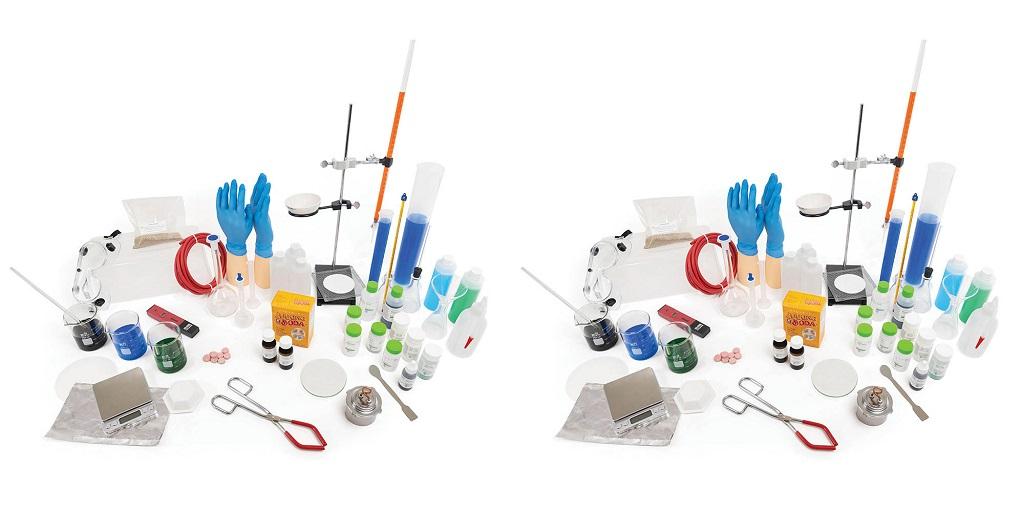
The word "chemistry" often conjures up memories of complex equations and daunting periodic tables. As a homeschooling parent, you might feel a pinch of anxiety when your child reaches the age to dive into the sciences. However, chemistry is simply the study of matter and how it changes, and since everything around us is matter, it is one of the most exciting subjects to explore at home.
Choosing the right homeschool chemistry curriculum is not just about checking a box for high school credits; it’s about giving your child the keys to understand how the world works, from the kitchen to the stars.
Understanding Your Child’s Learning Style
Before browsing through stacks of textbooks, take a moment to observe how your child absorbs information. In the world of home education, there is no "one size fits all."
- The visual learner: Look for programs that offer high-quality video demonstrations and colorful infographics. These students benefit from seeing a molecular bond animated rather than just reading about it.
- The kinesthetic learner: These are the "hands-on" kids. For them, the best chemistry curriculum is one built around a lab kit. They need to touch, mix, and measure to truly grasp the concepts.
- The auditory/reading learner: Some children thrive on "Living Books"—narrative-driven stories about famous scientists and the history of discovery.
Understanding these traits will help you narrow down your choices and prevent "curriculum burnout" halfway through the year.
Essential Components of a Strong Homeschool Chemistry Curriculum
A high-quality curriculum should be your partner in teaching, not a source of extra stress. When evaluating your options, look for these four pillars:
- Conceptual clarity: The material should explain the "why" behind the "what." It’s more important for a student to understand why a reaction occurs than to simply memorize a formula.
- Safety first: Since you are likely conducting experiments in your kitchen or garage, the curriculum must provide rigorous safety guidelines and clear instructions for disposing of household chemicals.
- Scaffolded learning: Chemistry builds upon itself. A good program starts with the basics of atoms and elements before moving into stoichiometry or organic chemistry.
- Teacher support: Unless you are a chemist, you’ll want a teacher’s guide that provides not just the answers, but the explanations behind them.
Balancing Theory and Hands-On Experiments
One of the biggest hurdles in homeschooling science is the "mess factor." It is tempting to stick to the textbook to avoid a sticky kitchen counter, but chemistry is a laboratory science.
The ideal homeschool chemistry curriculum balances rigorous theoretical study with practical application. Many modern programs utilize "microchemistry," which uses tiny amounts of chemicals to demonstrate big principles safely and with minimal cleanup.
Remember, an experiment that fails is not a waste of time; it is a vital lesson in the scientific method. Encourage your child to ask why the result wasn't what they expected. This critical thinking is where the real learning happens.
Ready to Bring Science to Life?
Teaching science at home is a unique opportunity to learn alongside your child. You don’t need to be an expert; you just need to be a facilitator of curiosity.
From fascinating reactions to practical experiments, chemistry is full of discovery, but it shouldn't be stressful for parents to organize. You can simplify your learning journey with a complete chemistry curriculum & lab kit, such as the ones available at Home Science Tools. Instead of hunting for obscure supplies, you will have all the materials you need at your fingertips, meaning you'll be exploring and experimenting in no time. It is a fantastic way to ensure your science days are filled with "wow" moments rather than preparation headaches.
For more information about Geology Kit Rocks and Crystal Growing Kit Please visit: Home Science Tools.

 English
 Arabic
 French
 Portuguese
 Deutsch
 Turkish
 Dutch
Dutch
 Italiano
 Russian
 Romaian
 Portuguese (Brazil)
 Greek
Greek