



I’m Thomas Anderson, an online review expert driven by a passion for discovering, testing, and evaluating digital platforms, websites, and online services. I dive deep into user experience, features, credibility, and overall performance to uncover what truly sets a platform apart. My motive is to deliver honest, insightful, and unbiased reviews that help people make smarter and more confident decisions online. By combining detailed research with real user perspectives, I aim to simplify the digital landscape and connect users with platforms they can trust. I share my expertise and in-depth reviews and helping readers navigate the online world with clarity and confidence.
-
5 Beiträge
-
4 Fotos
-
0 Videos
-
Male
-
Single
-
30/06/1980
-
anschliessend 1 people
Search

 English
 Arabic
 French
 Spanish
 Portuguese
 Turkish
 Dutch
Dutch
 Italiano
 Russian
 Romaian
 Portuguese (Brazil)
 Greek
Greek
Jüngste Beiträge
-
Artificial intelligence is changing how travel and hospitality businesses manage operations, serve customers, and respond to market demand. According to Statista, the global artificial intelligence market is expected to surpass $800 billion by 2030, reflecting growing adoption across industries, including travel and tourism.
Travel companies use AI-powered tools to analyze booking patterns, forecast demand, and optimize pricing strategies. These systems help businesses respond more effectively to changing market conditions while improving operational performance. In the airline sector, predictive analytics supports route planning, capacity management, and revenue optimization.
The hospitality industry is also adopting AI to improve service delivery. Hotels use automated check-in systems, virtual assistants, and intelligent reservation platforms to manage guest interactions and reduce administrative workloads. A McKinsey report found that organizations implementing AI-driven solutions can achieve meaningful productivity gains through automation and data-based decision-making.
Customer support has become another important area of application. AI chatbots can manage large volumes of inquiries simultaneously, helping businesses provide faster responses and maintain service consistency. Personalized recommendations based on customer preferences also help hotels and travel providers deliver more relevant experiences.
As investment in travel technology continues to grow, artificial intelligence is becoming an important component of modern hospitality management, customer experience strategies, and business operations across the global travel industry. For more details visit : https://www.reviewsbell.com/list-category/travel-tourism
Artificial intelligence is changing how travel and hospitality businesses manage operations, serve customers, and respond to market demand. According to Statista, the global artificial intelligence market is expected to surpass $800 billion by 2030, reflecting growing adoption across industries, including travel and tourism. Travel companies use AI-powered tools to analyze booking patterns, forecast demand, and optimize pricing strategies. These systems help businesses respond more effectively to changing market conditions while improving operational performance. In the airline sector, predictive analytics supports route planning, capacity management, and revenue optimization. The hospitality industry is also adopting AI to improve service delivery. Hotels use automated check-in systems, virtual assistants, and intelligent reservation platforms to manage guest interactions and reduce administrative workloads. A McKinsey report found that organizations implementing AI-driven solutions can achieve meaningful productivity gains through automation and data-based decision-making. Customer support has become another important area of application. AI chatbots can manage large volumes of inquiries simultaneously, helping businesses provide faster responses and maintain service consistency. Personalized recommendations based on customer preferences also help hotels and travel providers deliver more relevant experiences. As investment in travel technology continues to grow, artificial intelligence is becoming an important component of modern hospitality management, customer experience strategies, and business operations across the global travel industry. For more details visit : https://www.reviewsbell.com/list-category/travel-tourism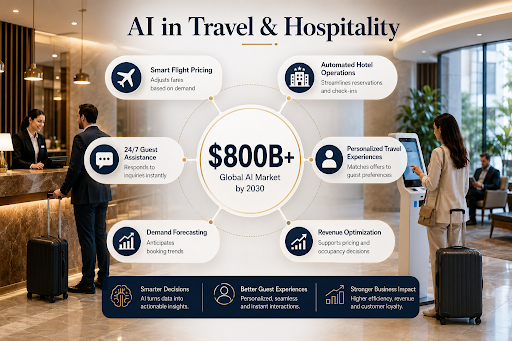 0 Kommentare 0 Anteile 171 Ansichten 0 Vorschau
 -
The global tourism sector is in the middle of a profound change, thanks to the integration of Artificial Intelligence (AI) and Virtual Reality (VR). In practice, these breakthrough technologies are helping make trips feel more customized, immersive, easier to reach, and also sustainable for both travelers and for companies across the world.
AI acts like the ultimate digital architect. It looks at individual user preferences and behavioral datasets, then builds those AI-powered recommendation engines that help in curating custom itineraries, and they also keep an eye on pricing in real time so the booking window is basically optimized. Once the journey is actually underway, 24/7 AI chatbots help remove transit friction by offering instant translation, localized navigation, and real time updates too. And on top of that, AI analytics lets tourism boards track crowd patterns, refine resource allocation, and deal with over-tourism as well.
Simultaneously, VR is starting to revolutionize the exploration experience. With immersive, high-fidelity previews, prospective travelers can literally “walk through” a hotel, step into a cruise cabin, or wander around famous landmarks globally, all before they book. That sort of experience removes a lot of purchasing uncertainty, because they can almost sense the place first. On-site, mixing VR and Augmented Reality (AR) breathes life into heritage tourism, and it makes cultural storytelling feel more vivid, using interactive 3D reconstructions from the past.
This technological paradigm shift reflects massive industrial momentum. The global AI in the tourism market is projected to show a robust CAGR of 26.7% from 2025–2030. In the meantime, as these ecosystems evolve, they keep redefining how humanity discovers the world in a way that feels new. For more details visit : https://www.reviewsbell.com/list-category/travel-tourism
The global tourism sector is in the middle of a profound change, thanks to the integration of Artificial Intelligence (AI) and Virtual Reality (VR). In practice, these breakthrough technologies are helping make trips feel more customized, immersive, easier to reach, and also sustainable for both travelers and for companies across the world. AI acts like the ultimate digital architect. It looks at individual user preferences and behavioral datasets, then builds those AI-powered recommendation engines that help in curating custom itineraries, and they also keep an eye on pricing in real time so the booking window is basically optimized. Once the journey is actually underway, 24/7 AI chatbots help remove transit friction by offering instant translation, localized navigation, and real time updates too. And on top of that, AI analytics lets tourism boards track crowd patterns, refine resource allocation, and deal with over-tourism as well. Simultaneously, VR is starting to revolutionize the exploration experience. With immersive, high-fidelity previews, prospective travelers can literally “walk through” a hotel, step into a cruise cabin, or wander around famous landmarks globally, all before they book. That sort of experience removes a lot of purchasing uncertainty, because they can almost sense the place first. On-site, mixing VR and Augmented Reality (AR) breathes life into heritage tourism, and it makes cultural storytelling feel more vivid, using interactive 3D reconstructions from the past. This technological paradigm shift reflects massive industrial momentum. The global AI in the tourism market is projected to show a robust CAGR of 26.7% from 2025–2030. In the meantime, as these ecosystems evolve, they keep redefining how humanity discovers the world in a way that feels new. For more details visit : https://www.reviewsbell.com/list-category/travel-tourism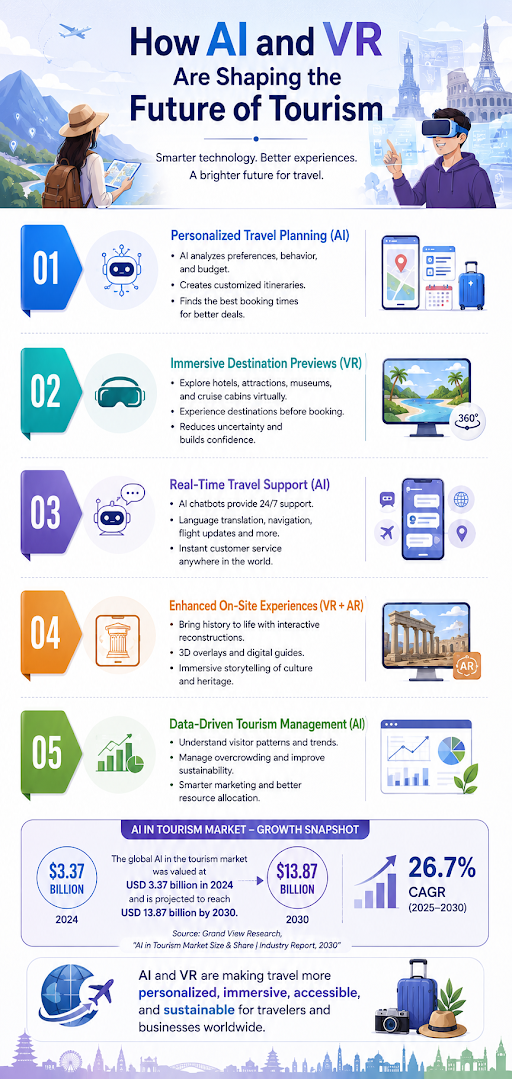 0 Kommentare 0 Anteile 312 Ansichten 0 Vorschau
 -
Travel has a way of changing people. A new destination can shift routines, introduce unfamiliar perspectives, and create memories that stay meaningful long after a trip ends. Yet many people delay travel because they believe unforgettable experiences require unlimited budgets. The reality is far different.
The world offers remarkable destinations for nearly every spending level. From the affordable energy and scenic beauty of Vietnam to Portugal’s coastal charm, each place delivers experiences shaped by local traditions, food, and atmosphere. Japan attracts travelers with a balance of heritage and innovation, while Italy remains timeless through its history, architecture, and celebrated cuisine. For those seeking elevated comfort and breathtaking landscapes, Switzerland represents a classic luxury escape.
Research on happiness and consumer behavior continues to show that experiences tend to create stronger and longer-lasting satisfaction than material purchases. Travel contributes to personal growth, emotional well-being, and lasting memories because people carry moments with them far longer than possessions.
The amount spent on a trip influences style, not meaning. Budget journeys can become the stories retold for years, while premium vacations can turn lifelong dreams into lived experiences. Whether your daily budget is $30 or $250+, travel remains one of the few investments that gives back more than what you spend: new experiences, different perspectives, and memories you may revisit for years after the journey ends. For more details visit : https://www.reviewsbell.com/list-category/travel-tourism
Travel has a way of changing people. A new destination can shift routines, introduce unfamiliar perspectives, and create memories that stay meaningful long after a trip ends. Yet many people delay travel because they believe unforgettable experiences require unlimited budgets. The reality is far different. The world offers remarkable destinations for nearly every spending level. From the affordable energy and scenic beauty of Vietnam to Portugal’s coastal charm, each place delivers experiences shaped by local traditions, food, and atmosphere. Japan attracts travelers with a balance of heritage and innovation, while Italy remains timeless through its history, architecture, and celebrated cuisine. For those seeking elevated comfort and breathtaking landscapes, Switzerland represents a classic luxury escape. Research on happiness and consumer behavior continues to show that experiences tend to create stronger and longer-lasting satisfaction than material purchases. Travel contributes to personal growth, emotional well-being, and lasting memories because people carry moments with them far longer than possessions. The amount spent on a trip influences style, not meaning. Budget journeys can become the stories retold for years, while premium vacations can turn lifelong dreams into lived experiences. Whether your daily budget is $30 or $250+, travel remains one of the few investments that gives back more than what you spend: new experiences, different perspectives, and memories you may revisit for years after the journey ends. For more details visit : https://www.reviewsbell.com/list-category/travel-tourism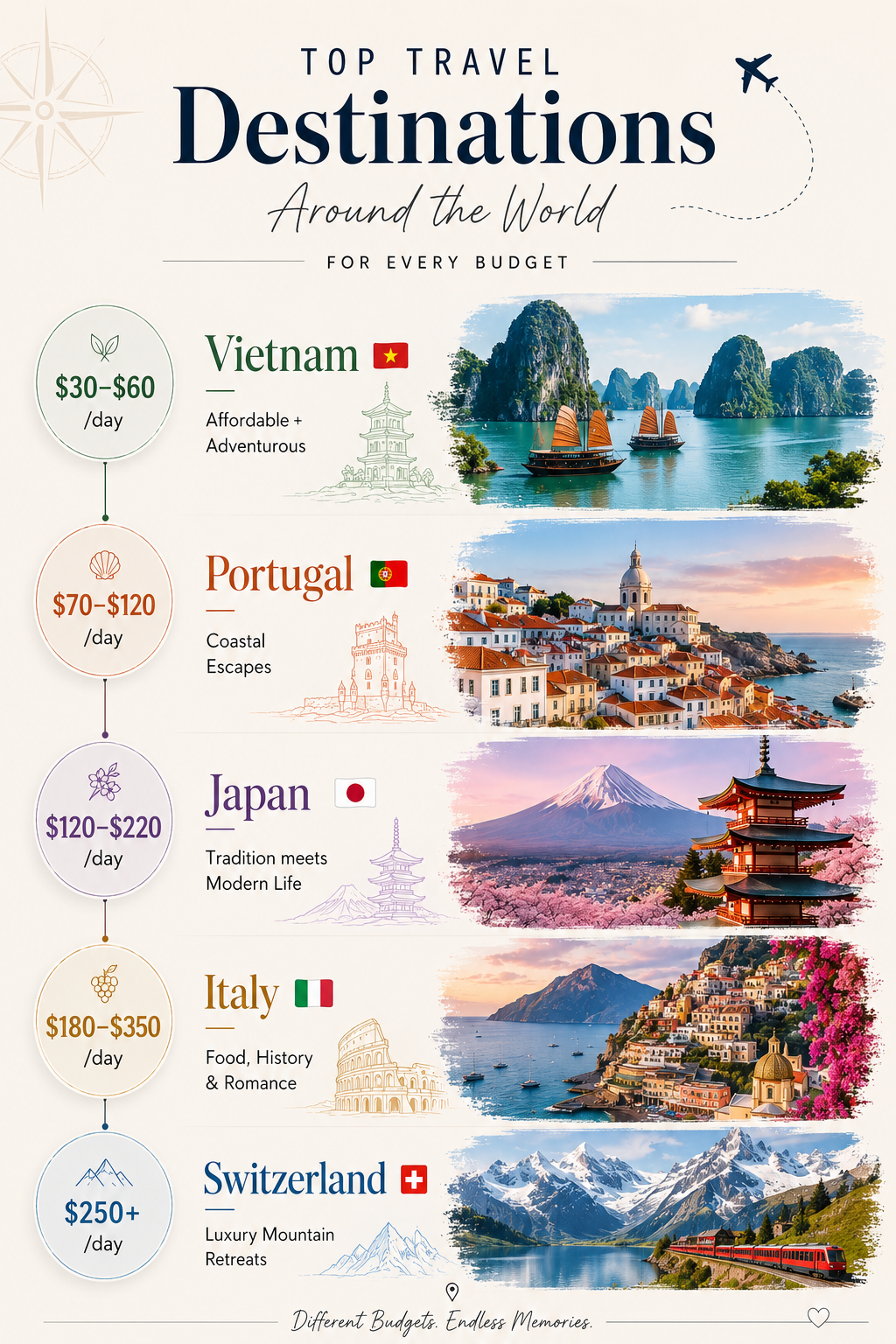 0 Kommentare 0 Anteile 480 Ansichten 0 Vorschau

Mehr Artikel