


Biopsy Needles Instruments & Image-Guided Bone Biopsy
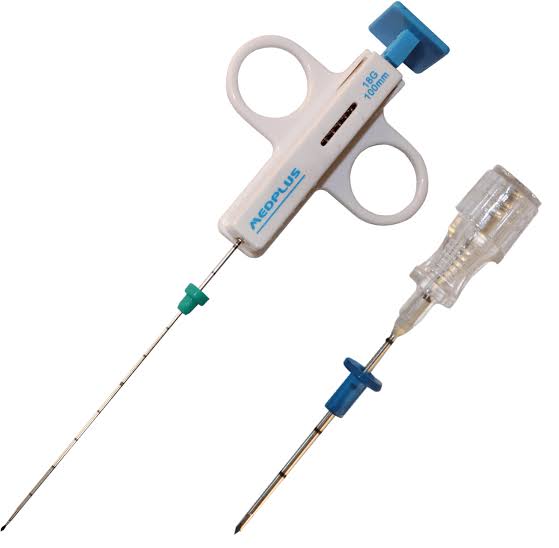
The successful image-guided bone biopsy depends on two factors: the imaging modality that guides the needle and the needle itself. Biopsy Needles and Instruments are the tools that penetrate bone, retrieve tissue, and preserve diagnostic material. Image-Guided Bone Biopsy provides the visualization that ensures the needle reaches the target. The two are inseparable: the most advanced imaging is useless without a needle that can access the lesion; the most sophisticated needle is dangerous without imaging guidance. For interventional radiologists, orthopedic surgeons, and musculoskeletal specialists, the comprehensive analysis on Biopsy Needles and Instruments provides essential insights.
H2: Matching Needle to Lesion
Image-Guided Bone Biopsy requires selecting the appropriate needle for the specific lesion. Factors to consider:
Lesion consistency: Lytic lesions (soft) can be sampled with standard core needles (11-14 gauge) that penetrate easily. Sclerotic lesions (hard) require trephine needles with serrated tips or powered drill systems.
Lesion location: Superficial lesions (clavicle, ribs, sternum) can be sampled with shorter needles (5-7 cm). Deep lesions (spine, pelvis, sacrum) require longer needles (10-15 cm) that can reach the target through intervening soft tissue.
Required tissue volume: Primary bone tumors require more tissue for grading and immunohistochemistry than metastatic carcinomas. Larger needles (11 gauge) are preferred for suspected sarcoma.
Proximity to critical structures: Lesions adjacent to spinal cord, major nerves, or large vessels may be sampled with smaller needles (14 gauge) or FNA needles (22 gauge) to reduce risk.
Biopsy Needles and Instruments must be compatible with the guidance modality. CT-compatible needles (non-ferromagnetic) are required for MRI guidance. Ultrasound-compatible needles (echogenic surface) improve visibility on ultrasound.
H2: The Coaxial Technique
The coaxial technique is the standard for Image-Guided Bone Biopsy. An introducer needle (typically 11-13 gauge) with a sharp stylet is advanced to the lesion under imaging guidance. Once the tip is within the lesion (or just at the cortex), the stylet is removed. A smaller biopsy needle (13-16 gauge) is passed through the introducer into the lesion, and multiple cores are obtained. The introducer remains in place, allowing multiple samples without re-penetrating the cortex.
Advantages of coaxial technique: only one cortical defect (reducing fracture risk), ability to change needles (from core to FNA to culture) through same introducer, ability to biopsy multiple areas of a heterogeneous lesion, and reduced risk of needle tract seeding (only the introducer contacts the skin; biopsy needles are withdrawn through the introducer).
Biopsy Needles and Instruments for coaxial biopsy include coaxial introducer sets (e.g., Argon Medical, Cook Medical, Merit Medical). The introducer has a Luer lock hub that accepts the biopsy needle.
H3: Needle Placement Verification
Image-Guided Bone Biopsy requires confirming needle position before sampling. CT confirms the needle tip is within the lesion. For lytic lesions, the needle tip should be visible within the lucency. For sclerotic lesions, the needle tip may be obscured; the operator must rely on tactile feedback (reduced resistance when crossing from sclerotic bone into lesional tissue). Some operators inject a small amount of contrast (0.5-1 mL) through the introducer; contrast within the lesion confirms position.
H2: Obtaining Adequate Specimens
Biopsy Needles and Instruments must be used correctly to obtain diagnostic tissue. Technique tips:
Rotate the needle: After advancing the biopsy needle into the lesion, rotate it 360 degrees to cut tissue from multiple directions before withdrawal.
Sample the periphery: The center of a large tumor may be necrotic (non-diagnostic); the periphery (viable tumor) is more likely to be diagnostic.
Obtain multiple cores: Three to five cores are typical. The first core may be blood or necrotic debris; deeper cores sample viable tissue.
Use on-site cytopathology: If available, a pathologist examines a touch preparation (imprint of the core on a slide) to confirm adequacy. If the sample is non-diagnostic, additional cores are obtained.
Send appropriate media: Core biopsy specimens go into formalin for histology. Additional cores go into sterile container for culture (if infection suspected). For suspected lymphoma, a core is placed in RPMI (or saline) for flow cytometry.
Image-Guided Bone Biopsy success depends on the operator's skill with needles. Training and experience improve diagnostic yield and reduce complications.
H2: Specialized Needles for Specific Applications
Biopsy Needles and Instruments include specialized devices for challenging cases.
Powered (drill) needles: For sclerotic lesions, manual trephine needles require significant force and may displace the lesion. Battery-powered drill systems (OnControl) provide consistent, controlled penetration with less operator fatigue.
Vacuum-assisted needles: For large soft-tissue components (e.g., Ewing sarcoma with large extraosseous mass), vacuum-assisted devices (e.g., Bard EnCor) obtain larger tissue volumes.
MRI-compatible needles: For MRI-guided biopsy, needles must be non-ferromagnetic (titanium or specific stainless steel alloys). These needles are more expensive and less available.
Image-Guided Bone Biopsy using advanced needles is safe and effective. Complication rates are low (<5%) in experienced hands. Major complications (bleeding requiring transfusion, infection requiring antibiotics, fracture requiring fixation) occur in <1% of cases.
H2: Future Trends
The future of Biopsy Needles and Instruments includes needles with integrated micro-sensors (confirming needle position within lesion), steerable needles (changing direction within bone to sample multiple areas through a single cortical defect), and biopsy needles that simultaneously obtain tissue for histology, microbiology, and molecular testing. For Image-Guided Bone Biopsy, robotics may enable remote biopsy (operator controls needle from outside the procedure room), reducing radiation exposure. For interventional radiologists and orthopedic surgeons, the market research available on Image-Guided Bone Biopsy offers comprehensive guidance.

 English
 French
 Spanish
 Portuguese
 Deutsch
 Turkish
 Dutch
Dutch
 Italiano
 Russian
 Romaian
 Portuguese (Brazil)
 Greek
Greek