


Temporary Vascular Implants & Biodegradable Stent Technology
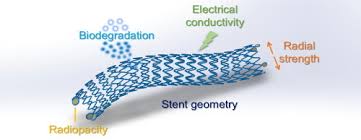
The concept of a temporary medical implant seems almost paradoxical: an object placed inside the human body that eventually disappears, leaving no trace. Yet this is precisely the promise of Temporary Vascular Implants, which provide mechanical support during the critical healing period after arterial injury and then gradually resorb, restoring natural vessel function. Biodegradable Stent Technology enables this paradigm shift through carefully engineered polymers and alloys that degrade at predictable rates via hydrolysis or corrosion. The primary materials used in contemporary temporary scaffolds are poly-L-lactic acid (PLLA), a biocompatible polymer used for decades in absorbable sutures and orthopedic fixation devices, and magnesium alloys, which corrode in the physiological environment to form magnesium hydroxide, carbonate, and phosphate—all naturally occurring and safely excreted. For cardiovascular researchers, interventional cardiologists, and medical device developers, the comprehensive analysis on Temporary Vascular Implants provides essential insights.
H2: Materials Science of Biodegradable Stents
Biodegradable Stent Technology relies on two material classes with distinct resorption mechanisms and kinetics.
Polymer-based scaffolds (PLLA): PLLA degrades via bulk hydrolysis, where water penetrates the polymer matrix, cleaving ester bonds and reducing molecular weight. The degradation products—lactic acid—are metabolized via the Krebs cycle into carbon dioxide and water. The mechanical properties deteriorate progressively: at 6 months, radial strength decreases by approximately 30%; at 12 months, by 60%; at 18-24 months, the scaffold fragments, and at 36 months, complete resorption occurs. The benefit of polymer scaffolds is excellent biocompatibility and proven safety; the limitation is relatively slow resorption and thick struts (120-150 microns) required for adequate radial strength.
Magnesium-based scaffolds: Magnesium degrades via surface corrosion in the chloride-rich physiological environment. The reaction Mg + 2H₂O → Mg(OH)₂ + H₂ produces hydrogen gas (absorbed by the body) and magnesium hydroxide. The corrosion rate is much faster than polymer hydrolysis: radial strength is lost within 3-6 months, and complete resorption occurs by 12 months. The benefit of magnesium scaffolds is faster resorption and thinner struts (down to 120 microns). The limitation is that rapid corrosion may produce hydrogen bubbles (though clinically insignificant) and the corrosion environment may affect healing. Both material classes continue to evolve, with research into iron-based and zinc-based alloys offering intermediate degradation rates.
H2: Vascular Healing After Scaffold Resorption
Temporary Vascular Implants are designed to restore natural vasomotor function—the ability of the artery to constrict and dilate. With permanent metal stents, the artery is "caged" indefinitely; it cannot respond normally to physiological stimuli like exercise (requiring dilation) or cold exposure (requiring constriction). Imaging studies of patients who received BVS demonstrate that after complete scaffold resorption, the treated segment shows vasomotion comparable to adjacent untreated segments. In contrast, segments with permanent stents show no vasomotion; the artery diameter remains fixed regardless of physiological demand.
This functional restoration has theoretical long-term benefits. Restored vasomotion may reduce the risk of very late adverse events (beyond 3-5 years), including very late stent thrombosis and restenosis. Additionally, the absence of permanent metal preserves future treatment options: if the patient develops a new lesion at the same site, the physician can treat it with any available technology without the constraints of an existing metal stent. For young patients facing Biodegradable Stent Technology, this "leaving nothing behind" approach is particularly attractive.
H3: Imaging After Scaffold Resorption
Follow-up imaging after scaffold resorption reveals an artery that appears angiographically normal. However, optical coherence tomography (OCT) shows preserved vascular layers and the absence of any metal artifact. This imaging clarity is valuable for both clinical care and research. In contrast, permanent stents create metal artifacts that persist for life, complicating non-invasive imaging (cardiac CT, MRI) and future angiographic assessments.
H2: Clinical Evidence for Temporary Implants
The BIOSOLVE-II trial evaluated the Magmaris magnesium scaffold (Biotronik) in 123 patients with de novo coronary lesions. At 12 months, the primary endpoint of target lesion failure was 4.9%, with no scaffold thrombosis. Optical coherence tomography at 12 months showed complete strut coverage in 99.5% of struts, with significant strut degradation visible. At 24 months, the scaffold was substantially resorbed, and vasomotion testing demonstrated preserved function.
The DESolve trial evaluated the PLLA-based DESolve scaffold (Elixir Medical) in 126 patients. At 12 months, target lesion failure was 4.0%, with one scaffold thrombosis (0.8%). At 24 months, OCT showed near-complete scaffold resorption and restored vasomotion comparable to the DESolve C trial.
The BVS Expand registry (1,800+ patients) reported that optimal implantation technique reduced thrombosis risk from 3.4% to 0.9%, suggesting that operator technique, not device technology alone, drives outcomes. For Temporary Vascular Implants to achieve widespread adoption, standardized training and proctoring programs are essential. For interventional cardiologists and hospital administrators evaluating Biodegradable Stent Technology for their catheterization laboratories, the market research available on Biodegradable Stent Technology offers comprehensive guidance.

 English
 Arabic
 French
 Spanish
 Portuguese
 Deutsch
 Turkish
 Dutch
Dutch
 Italiano
 Russian
 Romaian
 Portuguese (Brazil)