


Why Some Onion Search Engines Stop Working
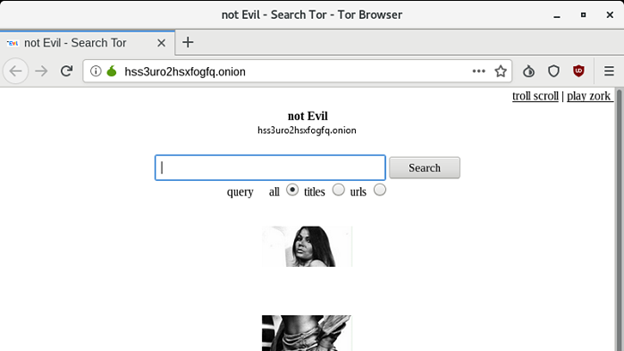
Did you know that nearly half of the links on the dark web are broken at any given moment? This high rate of failure is not always a sign of a cyber attack or a police shutdown. It is often a natural result of how the Tor network functions. When you try to access a specific search engine and find a blank page, you are experiencing a common hurdle in the world of anonymous browsing.
You might feel frustrated when a tool you rely on suddenly vanishes - these platforms provide a way to navigate a space that has no central directory. The very features that make these tools private also make them incredibly fragile. Maintaining a stable connection between a hidden server and a user involves many moving parts that can easily break.
In this article, we will look at the reasons behind these outages. You will learn about the technical challenges providers face and why the area changes so quickly. Understanding the factors helps you navigate the hidden web with more realistic expectations and better results.
Understanding Why Onion Services Go Offline
Onion services do not work like the standard websites you visit every day. In the normal internet, a domain name points directly to an IP address that stays relatively constant. In the Tor network, the path between you and the server is a series of three random jumps - this complexity is great for your privacy but it creates many points where the connection can fail.
Often, a search engine stops working simply because the person running it cannot afford the server costs anymore. Many of these sites are passion projects. They do not have ads or subscription models to pay the bills. If the owner loses interest or runs out of money, the site simply disappears. Because there is no "company" behind most onion tools, there is no one to keep the lights on during tough times.
DDoS attacks are another huge factor - Because onion sites are hard to track, they are also hard to protect with standard security tools. Malicious actors frequently flood these search engines with fake traffic - this overwhelms the small servers, making them unreachable for real people like you. Sometimes the attacks last for weeks, forcing the owners to take the site down permanently.
Technical Barriers in the Tor Network
The Tor network is constantly evolving to stay ahead of security threats. When the network updates its protocol, older onion addresses sometimes stop working. As an example, the move from "v2" to "v3" addresses caused thousands of sites to break. If a search engine developer does not update their code to match the new network standards, their site becomes a ghost.
Node congestion also plays a role in what looks like a broken site. Sometimes the search engine is actually online but the "introduction points" it uses are crowded. When too many people try to use the same path at once, your browser might time out - this gives the impression that the site is dead, even if it is just struggling with a heavy load of users.
Maintaining a search index is also a massive technical task. A search engine has to "crawl" other onion sites to know what exists. Because so many onion sites go offline, the search engine's database becomes full of dead links. If the crawler stops working, the search engine becomes useless, leading the owner to eventually shut it down. If you are new to this, a overview of Tor network systems can help you understand these layers better.
The Risk of Centralized Indexing
We usually think of search engines as giant, untouchable entities. In the dark web, they are often small and vulnerable. When one major search engine fails, it creates a ripple effect. Users flock to the remaining sites, which then crash under the sudden pressure - this creates a cycle where the most popular tools are often the most unstable ones.
Common reasons for sudden disappearance include
- Lack of hardware scaling to handle new users.
- Database corruption from massive amounts of unverified data.
- The owner choosing to stay anonymous and avoiding help from others.
You should also consider that some search engines are not meant to last. Some are set up as temporary experiments or "honey pots" to monitor traffic. Once they gather the data they need, the creators turn them off - this makes the environment feel like a moving target where today's top tool is tomorrow's 404 error.
Security Pressures & Server Maintenance
Running a search engine makes the owner a target - Even if the search engine itself is legal, the content it indexes might not be - this puts the administrator in a difficult legal and ethical position. Some providers choose to shut down rather than deal with the stress of moderating what their engine finds. It is a constant battle between providing an open service and staying safe.
Server maintenance is also much harder for hidden services. You cannot just call a help desk if your onion site goes down. You have to fix things through encrypted channels, often while staying anonymous yourself. If a piece of hardware breaks in a data center, the owner might not be able to fix it without revealing their identity. Many choose to let the site stay down instead of taking that risk.
Privacy is the priority, even over uptime - If a site owner suspects that their server location is no longer secret, they will kill the connection immediately - this "burn it all" approach is a standard safety measure. It is better for a search engine to go offline than to be compromised. You can find more background on privacy tools that explain how these developers prioritize safety over convenience.
How to Find Reliable Entry Points
Since the area changes so fast, you should never rely on just one source. Experienced users keep a list of multiple different entry points. If one fails, you have a backup - this diversity is the only way to ensure you can always find the information you need without getting stuck at a dead end.
To stay connected, consider the steps
- Check community forums for status updates on popular engines.
- Use "clearnet" link directories that track which onion sites are active.
- Avoid bookmarking deep pages - instead, bookmark the main gateway.
The dark web is a place of constant change - While it is annoying when a search engine stops working, it is also a sign that the network's privacy features are functioning as intended. Sites that are easy to find and stay up forever are often the ones that are the least private. Accept the instability as a trade off for the anonymity you gain while browsing.
FAQ
Is it dangerous if a search engine I use goes offline?
Usually, no - It generally means the server is having technical issues or the owner stopped paying for it. Your personal data is usually safe because Tor does not share your identity with the site in the first place.
How can I tell if a site is down for everyone or just me?
First, try to refresh your "identity" in the Tor Browser - If other onion sites work but one doesn't, the problem is likely with that specific search engine. You can also check status checker websites on the regular internet.
Why do search engines change their addresses so often?
Owners change addresses to avoid long term DDoS attacks or to upgrade to more secure versions of the onion protocol. It is a way to shake off unwanted attention and start fresh with better security.
Are there any search engines that never go down?
Total uptime is almost impossible in the Tor network - Even the most famous sites have bad days. The best approach is to have three or four different search tools saved so you always have an alternative.
Why is the dark web so slow compared to normal sites?
Your traffic is jumping through three different relays around the world - this adds a lot of time to every click. When a search engine is also struggling with its own server load, the delay can make it feel like the site is broken when it is actually just very slow.

 English
 Arabic
 French
 Spanish
 Portuguese
 Deutsch
 Turkish
 Dutch
Dutch
 Italiano
 Russian
 Romaian
 Greek
Greek