


What Is Keyword Difficulty in SEO: How to Measure and Target Keywords
Understand What Keyword Difficulty in SEO Is: How to Measure and Target Keywords
In search engine optimization, choosing the right keywords often matters more than choosing many keywords. One of the most important concepts behind smart keyword selection is keyword difficulty. If you have ever wondered why some pages rank quickly while others struggle for months, keyword difficulty is usually part of the answer. Understanding it helps you set realistic expectations, plan better content, and focus your efforts where results are actually possible.
This blog explains keyword difficulty in a clear and practical way. It is written to help beginners and experienced marketers alike understand how search competition works, how difficulty is measured, and how to target keywords that match your website’s real potential.
Understanding Keyword Difficulty in Simple Terms
Keyword difficulty is a metric that estimates how hard it is to rank on the first page of search engines for a specific keyword. It reflects the level of competition you face from existing pages already ranking for that search query. When many strong websites target the same keyword with high quality content and authoritative backlinks, ranking becomes harder.
On the other hand, when fewer strong competitors exist, the keyword is considered easier. Keyword difficulty does not guarantee ranking success or failure, but it gives direction. It tells you whether a keyword is worth targeting now or later.
Why Keyword Difficulty Matters for SEO Growth
Keyword difficulty matters because it helps you avoid wasted effort. Many websites fail not because their content is bad, but because they target keywords that are far beyond their current authority. By understanding difficulty, you can align your content strategy with your website’s actual strength.
Additionally, keyword difficulty supports long term planning. Easier keywords help build initial visibility and trust, while harder keywords can be targeted once authority grows. As a result, SEO becomes more structured and less random.
How Search Engines Create Competition
Search engines rank pages based on relevance, quality, and trust signals. When multiple pages satisfy the same intent, competition increases. Keyword difficulty rises when top ranking pages have strong backlinks, consistent traffic, expert level content, and good user engagement.
Moreover, intent clarity plays a role. Keywords with commercial or widely searched informational intent often attract large publishers and established brands. As a result, even well written content may struggle without authority support.
Common Factors That Influence Keyword Difficulty
Several factors combine to shape keyword difficulty. First, backlink profiles matter. Pages with strong inbound links signal trust and authority. Second, content depth and relevance play a key role. Well structured, comprehensive content tends to dominate rankings.
Third, domain authority influences difficulty. Established domains naturally rank faster. Fourth, search intent alignment matters. If existing results perfectly match user expectations, replacing them becomes harder. Lastly, SERP features like featured snippets and video results can raise difficulty by limiting organic space.
How Keyword Difficulty Is Measured by SEO Tools
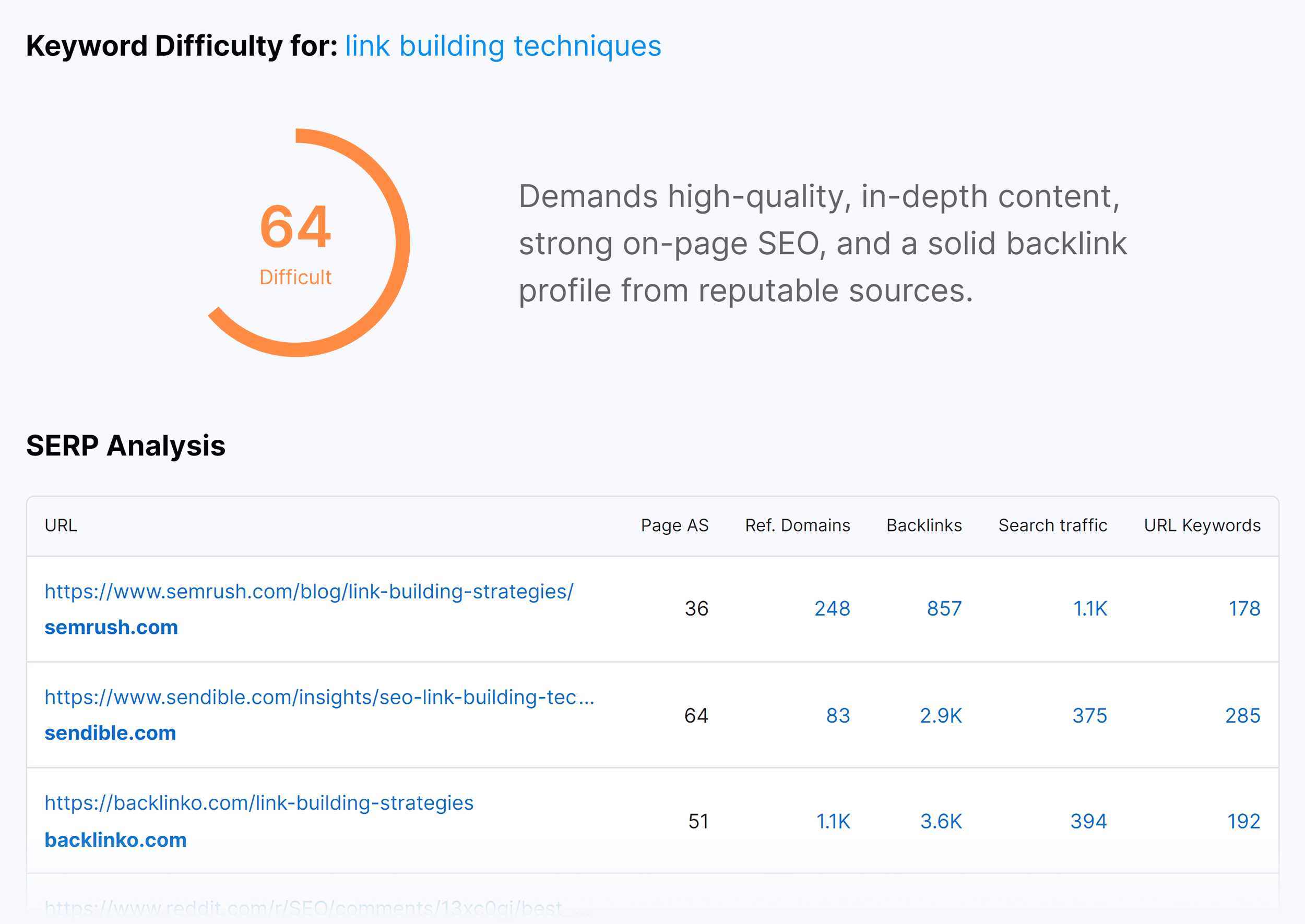
Most SEO tools calculate keyword difficulty using proprietary algorithms. These tools analyze the top ranking pages for a keyword and evaluate factors like backlinks, domain strength, content quality signals, and ranking stability.
Usually, keyword difficulty is shown as a numerical score, often on a scale from 0 to 100. Lower scores suggest easier keywords, while higher scores indicate stronger competition. However, these numbers are estimates, not absolute truths. They should guide decisions, not replace judgment.
Manual Analysis for Better Accuracy
Although tools help, manual review adds clarity. When you search a keyword and analyze the top results, you can see the real competition. Check whether results come from forums, blogs, or authoritative sites. Look at content length, freshness, and structure.
Additionally, examine whether ranking pages truly answer the query or simply exist due to authority. Sometimes, this gap creates opportunity even in moderate difficulty keywords.
Keyword Difficulty vs Search Volume
Many people chase high volume keywords and ignore difficulty. This often leads to frustration. High volume keywords usually come with high difficulty. Meanwhile, lower volume keywords often have clearer intent and better conversion potential.
Balancing difficulty and volume is essential. A keyword with moderate volume and manageable difficulty often brings more consistent traffic than a highly competitive term that never ranks.
Matching Keyword Difficulty With Website Authority
Every website has a different capacity to compete. New websites should focus on low difficulty keywords that match specific questions or niche topics. As content ages and authority builds, slightly harder keywords become achievable.
Established websites can target competitive keywords more confidently. However, even strong sites benefit from a mix of easy and challenging terms to maintain traffic stability.
Long Tail Keywords and Difficulty Advantage
Long tail keywords usually have lower difficulty because they are more specific. Although their search volume is lower, their intent is clearer. Users searching long phrases often know exactly what they want.
Targeting these keywords helps build topical relevance. Over time, this strengthens your ability to rank for broader terms. This step by step approach aligns well with sustainable SEO practices.
The Role of Content Quality in Overcoming Difficulty
High quality content can sometimes outperform stronger competitors. When content is clearer, better structured, and more helpful, users stay longer and engage more. These signals indirectly support ranking improvement.
Content should focus on clarity, accuracy, and real value. Personal insights, practical explanations, and updated information make content more trustworthy. This aligns with EEAT principles and improves long term ranking stability.
Using Keyword Difficulty for Content Planning
Keyword difficulty should shape your editorial calendar. Easier keywords can be assigned to newer pages, while harder keywords can be planned as pillar content. This creates balance between quick wins and long term goals.
Additionally, clustering related keywords helps distribute authority internally. Supporting articles strengthen main pages, improving their ability to compete for harder terms.
Common Mistakes When Using Keyword Difficulty
One common mistake is blindly trusting tool scores without context. Another is ignoring search intent. Even low difficulty keywords fail if content does not match intent.
Some people also avoid all difficult keywords. While caution is good, avoiding competition entirely limits growth. The goal is balance, not fear.
How Keyword Difficulty Fits Into Modern SEO
Modern SEO focuses on relevance and user experience. Keyword difficulty remains important, but it works best alongside intent analysis, content quality, and technical optimization.
As search engines evolve, they reward clarity, depth, and trust. Keyword difficulty helps you choose battles wisely within this evolving system. This approach is commonly seen across research practices followed by the Best SEO Agency in USA, where data is used to guide content decisions without compromising quality.
Building Confidence Through Smart Keyword Choices
When keywords match your site’s strength, results feel more predictable. Rankings improve steadily, traffic grows naturally, and confidence builds. This positive cycle makes SEO more enjoyable and sustainable.
Over time, keyword difficulty becomes less intimidating and more like a planning tool. It helps you see the bigger picture instead of chasing random rankings.
Conclusion
Keyword difficulty is not a barrier, but a guide. It shows where competition is strong and where opportunity exists. By understanding how difficulty works, measuring it correctly, and aligning it with your website’s authority, you can create a realistic and effective SEO strategy.
Rather than chasing every popular keyword, focus on those that make sense for your stage of growth. Combine tool data with human judgment, write content that genuinely helps users, and allow your site to grow naturally. In the long run, this balanced approach leads to stable rankings and meaningful traffic.
FAQs (Frequently Asked Questions)
What is keyword difficulty in SEO and why is it important?
Keyword difficulty in SEO refers to how competitive it is to rank for a specific keyword in search results. It is important because it helps website owners choose keywords that match their site’s authority and resources. By understanding difficulty, you can avoid targeting overly competitive keywords and instead focus on achievable opportunities that bring consistent and relevant traffic over time.
Can keyword difficulty change over time?
Yes, keyword difficulty can change over time as competition evolves. New websites may enter the space, existing pages may gain or lose backlinks, and search intent can shift. Updates in search engine algorithms also influence rankings. Because of this, it is important to review keyword difficulty periodically rather than relying on old data when planning content.
Is low keyword difficulty always better for SEO?
Low keyword difficulty is helpful, especially for new or smaller websites, but it is not always the best choice. Some low difficulty keywords may have very low search volume or unclear intent. The best approach is to balance difficulty with relevance, intent, and potential value, ensuring the keyword actually supports your content and audience goals.
How accurate are keyword difficulty scores from SEO tools?
Keyword difficulty scores from SEO tools are useful estimates, but they are not perfect. Each tool uses its own calculation methods based on backlinks, authority, and ranking data. These scores should be used as guidance rather than absolute truth. Manual analysis of search results often provides additional insights that tools cannot fully capture.
How should beginners use keyword difficulty when starting SEO?
Beginners should use keyword difficulty to set realistic expectations and avoid frustration. Focusing on low to moderate difficulty keywords with clear intent helps build early visibility and confidence. Over time, as content grows and authority improves, beginners can gradually target more competitive keywords, creating a steady and sustainable SEO growth path.

 English
 Arabic
 Spanish
 Portuguese
 Deutsch
 Turkish
 Dutch
Dutch
 Italiano
 Russian
 Romaian
 Portuguese (Brazil)
 Greek
Greek